
By Muhammad Talha Saeed Published January 2026 | Updated August 2026
Categories: B2B SaaS, Revenue Operations, CRM Automation, Lead Prioritization, Sales Strategy
“Modern B2B SaaS go-to-market (GTM) teams are abandoning low-intent, activity-based metric collection in favor of high-fidelity Ideal Customer Profile (ICP) alignment. Understanding the icp scoring rubric b2b saas definition is essential because traditional pipeline generation models built on raw marketing-qualified lead (MQL) volume frequently create friction between sales and marketing.”Modern B2B SaaS go-to-market (GTM) teams are abandoning low-intent, activity-based metric collection in favor of high-fidelity Ideal Customer Profile (ICP) alignment. Understanding the icp scoring rubric b2b saas definition is essential because traditional pipeline generation models built on raw marketing-qualified lead (MQL) volume frequently create friction between sales and marketing.
Elite Revenue Operations (RevOps) organizations have transitioned to mathematical, account-level scoring rubrics. These frameworks predict Customer Lifetime Value (CLV) and win probability long before a discovery call is ever booked.
What is an ICP Scoring Rubric B2B SaaS Definition and Core Purpose?
An ICP scoring rubric is a weighted, multi-dimensional mathematical model that assigns every account in a Total Addressable Market (TAM) a standardized score from 0 to 100.
Unlike a static buyer persona profile sitting in a company wiki, an operational scoring rubric acts as an automated triage filter inside your CRM. It evaluates structural fit across firmographics, technographics, buying triggers, and behavioral signals. This quantitative framework ensures sales representatives direct their outbound sequences and discovery efforts only toward high-velocity revenue opportunities.
The Core Dimensions of a Modern 2026 ICP Scoring Rubric
To build an authoritative scoring model that survives algorithmic scrutiny and drives actual revenue, your rubric must balance static baseline attributes with dynamic market motion.
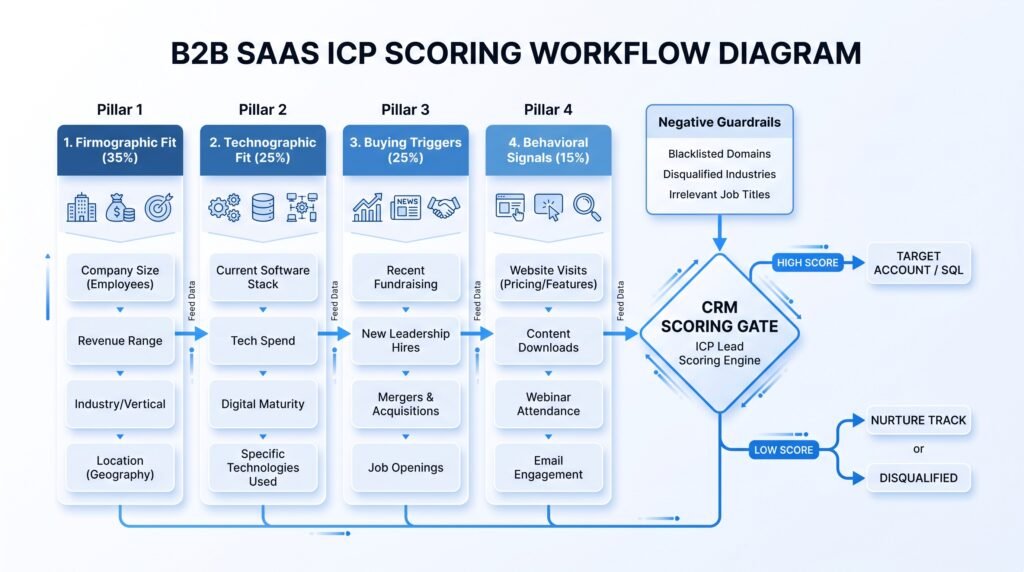
1. Firmographic Fit (The Structural Foundation — 35% Weight)
Firmographics establish whether a company matches your structural parameters. However, top-performing SaaS teams have evolved beyond basic employee counts.
- Buying Team Size over Total Headcount: Total headcount can be misleading. If your product is a developer-tool, a manufacturing enterprise with 5,000 employees but only 12 active software engineers is a low-value target. Score based on department-specific headcount.
- Funding Stage as a Velocity Proxy: In current market cycles, Series B and C companies often represent shorter sales cycles and higher purchasing velocity than enterprise or public corporations, which face prolonged procurement and security committee reviews.
2. Technographic Compatibility (The Force Multiplier — 25% Weight)
Technographics measure how seamlessly your product integrates into a prospect’s existing software architecture, heavily influencing overall SaaS product design patterns and user onboarding speed.
- Ecosystem Incumbents: If your SaaS platform relies on a native Salesforce or HubSpot integration, accounts utilizing those CRMs receive high value weighting.
- Data Infrastructure Maturity: The presence of upstream orchestration tools (such as Segment, RudderStack, or Mulesoft) indicates that the prospect possesses the technical maturity required to implement and retain your software successfully.
3. Buying Triggers & Intent Signals (Market Motion — 25% Weight)
Static data tells you who a company is; dynamic triggers tell you when they are ready to buy.
- Funding and Executive Hiring Windows: The six-month window following a fresh funding round or the onboarding of a new VP of Sales/RevOps represents peak software stack restructuring.
- Competitive Contract Expirations: Tracking when a target account’s contract with a legacy competitor is up for renewal allows your outbound sequence to trigger precise competitive displacement messaging.
4. Behavioral Engagement (Tie-Breakers — 15% Weight)
Direct user engagement (pricing page visits, documentation reads, and webinar attendance) carries the least weight in a structural model. It serves primarily as a tie-breaker when two accounts share identical firmographic and technographic scores.
Master ICP Scoring Rubric Template
| Attribute Category | Specific Criteria Example | Assigned Weight | Operational Rationale |
|---|---|---|---|
| Firmographic | Annual Revenue > $50M | +15 Points | Verifies budget stability and enterprise-tier renewal probability. |
| Firmographic | Target Department Headcount > 20 | +20 Points | Directly correlates with seat expansion and user adoption potential. |
| Technographic | Uses Salesforce CRM (Native Sync) | +25 Points | Eliminates custom middleware friction; cuts onboarding time. |
| Technographic | Uses Data Pipeline Infrastructure | +15 Points | Proves technical capability to execute API integrations. |
| Expansion Signal | Multi-Regional Offices (3+) | +10 Points | High probability of “Land and Expand” Net Revenue Retention (NRR) growth. |
| Negative Guardrail | Free Email Domains (@gmail.com) | -50 Points | Disqualifies low-intent personal inquiries instantly. |
| Negative Guardrail | Legacy Incompatible Tech Stack | -30 Points | Signals severe data migration friction and high implementation churn. |
| TOTAL SCORE | Maximum Scale: 100 | Threshold: | >70 = High-Fit Account (Immediate AE Outbound Priority) |
Implementing the Rubric in Your CRM (HubSpot & Salesforce Logic)
Theory without execution creates operational overhead. To operationalize this rubric, you must deploy automated calculation logic within your CRM infrastructure.
Step 1: Automated Data Enrichment
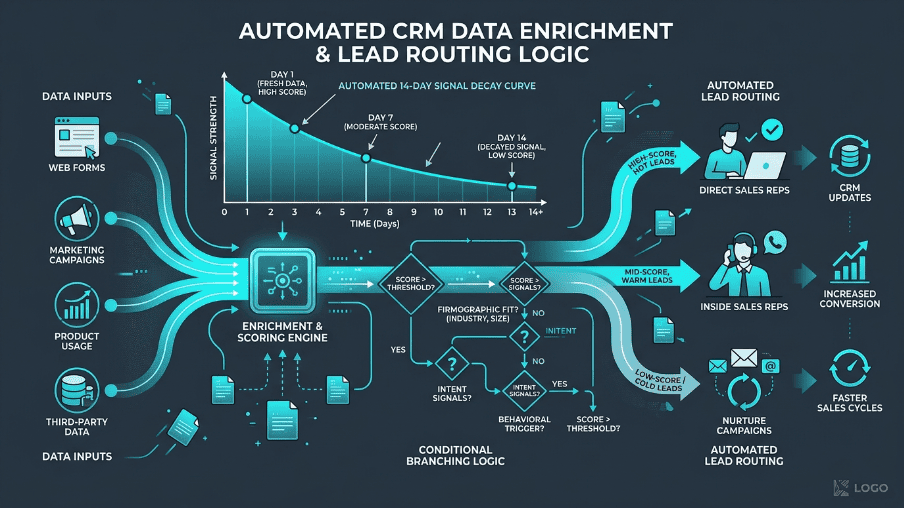
You cannot score data you cannot see. Configure backend enrichment webhooks using providers like Clay, Apollo, or Clearbit to continuously populate custom account properties (Funding Stage, Tech Stack, Department Headcount) whenever records are created or updated.
Step 2: Handling Signal Decay
In fast-moving SaaS markets, intent data has a strict half-life. If an account’s buying trigger or behavioral intent signal has not refreshed within 14 days, your CRM automation should automatically apply a signal decay reduction (e.g., dropping behavioral score allocation by 15% weekly) to prevent stale data from keeping cold accounts in active sequences.
Step 3: Automated Routing Rules
Score-based routing ensures that low-fit accounts are filtered out before being funneled into generic SaaS companies free trial offers that only inflate customer acquisition costs.
- Score $\ge$ 70: Automatically assign to an Account Executive (AE) high-priority outbound sequence.
- Score 50–69: Enroll in a targeted RevOps nurture track.
- Score < 50: Route to marketing-led automated email pools; do not waste human SDR cycles.
Frequently Asked Questions
What is the primary difference between ICP scoring and traditional lead scoring?
ICP scoring evaluates structural fit at the account level (examining whether a company matches your ideal customer profile regardless of individual actions). Lead scoring measures engagement at the person level (tracking email opens, content downloads, and page views). ICP scoring must always occur first to prevent wasting SDR hours on engaged individuals at bad-fit companies.
How often should a B2B SaaS team audit their scoring rubric weights?
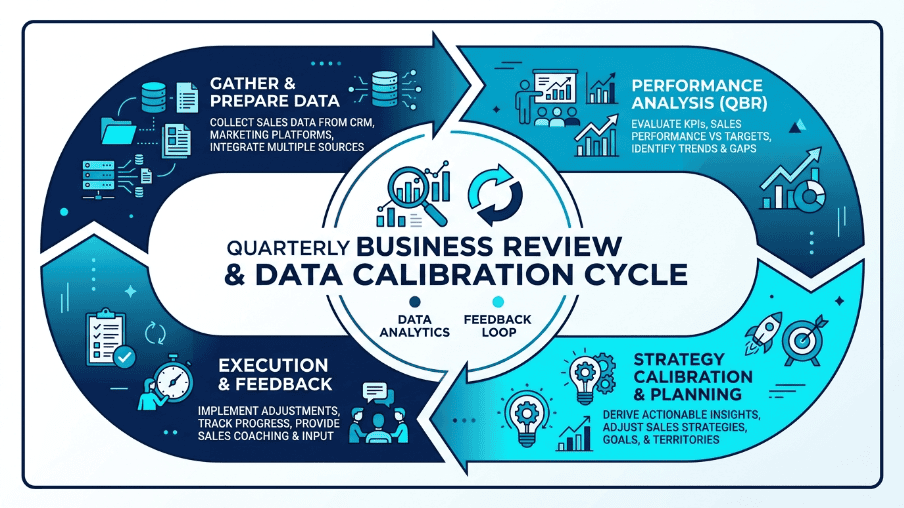
Your ICP model should be reviewed on a quarterly basis. Pull your closed-won data from the preceding 90 days and isolate your top-quartile cohort (highest ACV, lowest churn, fastest velocity). If your best-customer profile shifts toward a new vertical or tech stack combination, adjust your rubric weights to match current reality.
Why are negative scoring guardrails critical in a modern SaaS rubric?
Most rubrics only add points, which causes sales pipelines to fill with low-quality noise. Implementing strict negative thresholds (such as penalizing accounts tied into long-term competitor contracts or operating in high-churn industries) protects your customer success team from onboarding toxic accounts that destroy unit economics.
[…] the right buyers is part of your agenda, bring your existing account-fit criteria. Our guide to ICP scoring for B2B SaaS covers customer-fit dimensions and CRM-based account prioritization. Use it to prepare questions […]