
Last Updated: FEBRUARY 13, 2026 | Verified by: TALHA SAEED | Senior SaaS Strategist
SaaS sales is the process of selling cloud-based software through a subscription model, where customers pay monthly or yearly fees. Unlike traditional sales, the focus is on long-term relationships and Net Revenue Retention (NRR). In 2026, successful SaaS sales uses AI-driven signals and Product-Qualified Leads (PQLs) to ensure fast growth and low customer acquisition costs.
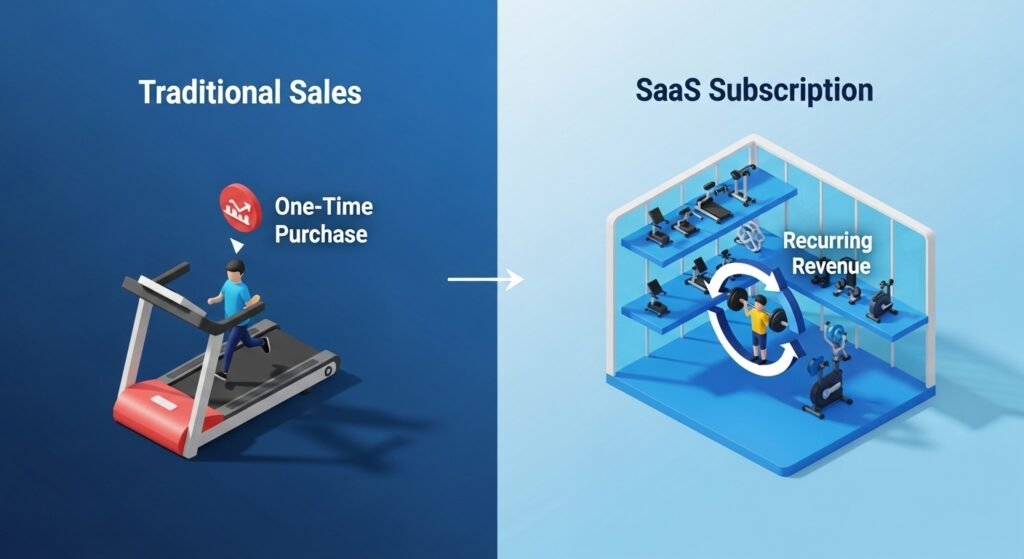
SaaS Sales 101: The “Gym Membership” Analogy
Unlike selling physical products (like cars or houses), SaaS sales focuses on selling software subscriptions. The goal isn’t just to get a customer to buy once, but to keep them happy so they pay every month for years.
The SaaS Sales Team: Key Roles & Responsibilities
Before diving into strategy, it is critical to understand who does what in a SaaS organization. Unlike traditional sales where one person does everything, SaaS splits the job into specialized roles:
- SDR/BDR (Sales Development Rep): These are the “Hunters.” Their only job is to find leads, send cold emails, and book meetings. They do not close deals.
- AE (Account Executive): These are the “Closers.” They take the meeting booked by the SDR, give the demo, negotiate pricing, and get the contract signed.
- CSM (Customer Success Manager): Once the deal is signed, the CSM takes over. They ensure the customer is happy so they renew their subscription next year.
SaaS Sales Salaries & Roles (2026 Estimates)
| Role | Key Responsibility | Average Base Salary |
| SDR / BDR | Cold Outreach & Lead Gen | $50k – $70k |
| Account Executive | Demos & Closing Deals | $80k – $120k |
| Customer Success | Retention & Upselling | $70k – $100k |
Why the SaaS Sales Process is Unique
Unlike traditional sales, the SaaS process is non-linear. Even after the “Closed Won” stage, the sales team must monitor “Product Usage Signals.” If a customer isn’t using the software, the Sales team must intervene to prevent churn. This is why Product-Qualified Leads (PQLs) are now more important than Marketing-Qualified Leads (MQLs).
The SaaS Sales Cycle (How It Works)
A typical B2B SaaS deal follows these 4 steps:
- Prospecting: Finding potential customers (Outbound or Inbound).
- Discovery & Demo: Understanding the client’s pain points and showing the software via Zoom/Google Meet.
- Negotiation: Agreeing on price and contract terms.
- Closed Won: The contract is signed, and the customer is handed off to the Success team.
Summary: Traditional Software vs. SaaS
This video breaks down why businesses are moving away from legacy software toward SaaS. It highlights 8 key advantages including 24/7 cloud accessibility, free updates, and lower initial investment.
Key Strategic Insights:
- [00:00:09] Cloud-based accessibility: Accessing sales data 24/7 from anywhere.
- [00:00:47] Free Updates: How SaaS removes the “expensive upgrade” barrier.
- [00:02:12] Scalability: Adapting the software as the user base grows.
- [00:02:22] Low Initial Investment: Reducing the barrier to entry for B2B buyers.
Treadmills vs. Memberships
Think of Traditional Software Sales like selling a treadmill. Once the customer buys it, the transaction is over. As a result, you don’t care if they use it or not.
In contrast, SaaS Sales is like selling a gym membership. The initial “close” is just the beginning. If the member doesn’t find value in the first 30 days, they cancel. Consequently, your revenue is a relationship that must be earned every month.
The Shift: Why Traditional Sales is Changing in 2026
Industry data from over 200 SaaS companies shows a clear pattern in 2026: Companies relying solely on brute-force cold calling are failing.. Moreover, when the cost of a human SDR exceeds the Initial Contract Value (ACV), your sales model istechnically insolvent.
Why Outbound Tactics are Failing
The CAC Crisis is currently driven by two major factors:
- Noise Saturation: B2B buyers are bombarded by AI outreach. Consequently, standard prospecting has a near-zero response rate.
- The Payback Gap: If your sales team has a 24-month payback period but customers churn at 18 months, you lose money on every sale.
Advanced Strategy: Moving Beyond Cold Calling
To rank #1 and build a profitable company, you must transition to Revenue Orchestration.
This replaces traditional sales ops by unifying product data into a single source of truth. This shift is often discussed in the latest SaaS pricing news.
1. Signal-Based Selling
Summary: Mastering Signal-Based Sales
Signal-based selling uses real-time data to identify high-probability prospects. This video explains the four critical data signals: firmographic, technographic, persona, and intent.
Key Strategic Insights:
- [00:00:18] Definition: Using data to prioritize sales opportunities.
- [00:01:05] The 4 Key Categories: Firmographic, Intent, Technographic, and Persona signals.
- [00:01:19] Technographic Signals: Understanding a prospect’s tech stack ecosystem.
- [00:01:44] Signal Density: Prioritizing accounts with multiple high-intent signals.
In 2026, we ignore “cold” leads and focus on Signals:
- Technographic: For example, a prospect just installed a competing API.
- Product: A free-trial user has reached 80% of their usage limit.
- Economic: A company secured funding for a project requiring your tools.
The 4 Pillars of SaaS Sales Success
To build a $1M+ ARR engine, you must master these four foundational pillars:
- Product-Market Fit (PMF): Your software must solve a “bleeding neck” problem. If the product doesn’t work, even the best sales team can’t save it.
- Scalable Outbound: In 2026, this isn’t about volume; it’s about precision. Using AI to find the right person at the right time.
- Customer Success: Revenue in SaaS is won after the sale. Continuous support ensures the customer stays for years, not months.
- Unit Economics: You must ensure your LTV (Lifetime Value) is at least 3x your CAC (Customer Acquisition Cost) to remain profitable.
Implementation: Building the Sales Machine
The 2026 Revenue Stack
Summary: The 2026 AI Sales Workflow
A deep dive into how AI agents and custom GPTs are saving sales professionals 10+ hours per week by automating discovery summaries and follow-up sequences.
Key Strategic Insights:
- [00:01:55] Custom GPTs: Using tailored AI for specific sales tasks.
- [00:03:55] Prompt Engineering: Giving AI specific roles (e.g., SDR vs. Account Executive).
- [00:05:20] Discovery Summaries: Automating follow-ups from call transcripts.
- [00:07:14] Deep Research: Using AI to plan territories and analyze account strength.
- Agentic AI-SDRs: These autonomous agents handle API Discovery. Furthermore, they qualify leads based on intent.
- Digital Sales Rooms (DSR): A centralized hub where the buyer sees the contract and the Implementation Roadmap in one place.
The “Aha! Moment” Discovery
Your discovery calls should no longer be checklists. In 2026, the discovery call is a Value-Mapping session. Instead of asking for a budget, you should ask how quickly the software pays for itself.
Expert Perspective: The $4M Turnaround
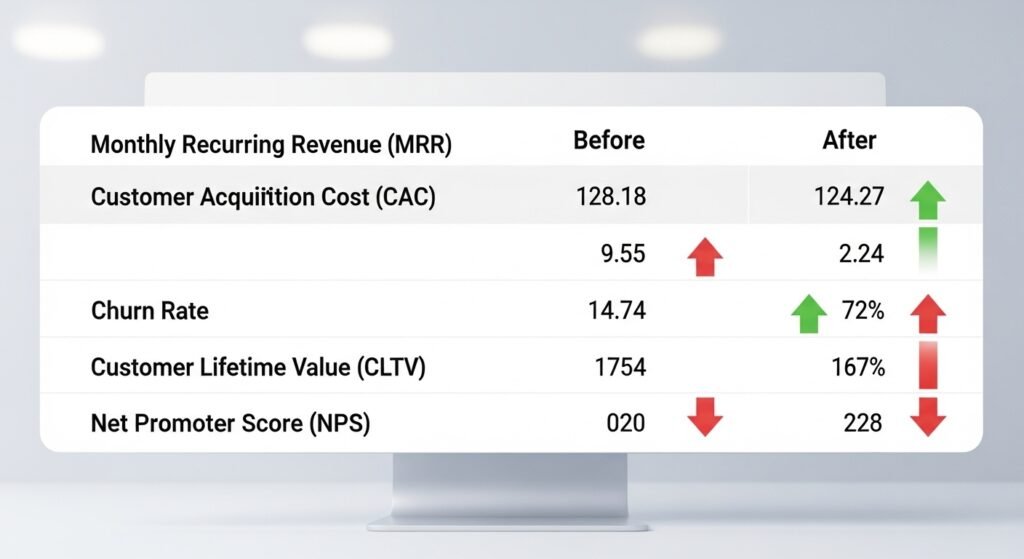
Last year, a DevTools firm came to me with a massive growth problem. Their top-of-funnel was huge, but their CAC Payback was an ugly 22 months.
The Unit-Economic Fix
To solve this, we implemented a Unit-Economic Filter. This required a solid SaaS pricing strategy to ensure long-term viability. Consequently, reps only received commission if the lead predicted high NRR.
| Metric | Before Pivot | After Pivot (6 Months) |
| CAC Payback | 22 Months | 11 Months |
| NRR | 82% | 126% |
Mastering the Math: 2026 Unit Economics
Summary: LTV, CAC, and Payback Math
A masterclass on the unit economics that define SaaS success. Learn how to calculate the LTV:CAC ratio and why the CAC Payback Period is the most important metric for survival.
Key Strategic Insights:
- [00:02:21] LTV:CAC Ratio: Evaluating customer value against acquisition cost.
- [00:06:21] Churn Rate: The formula for estimating average customer lifetime.
- [00:15:31] Defining CAC: Which expenses must be included in your acquisition math.
- [00:19:59] CAC Payback Period: How many months it takes to break even on a new customer.
To rank at the top, you must speak the language of the CFO.
1. The CAC Payback Period
$$CAC\ Payback = \frac{Avg.\ Cost\ to\ Acquire\ a\ Customer}{Avg.\ MRR \times Gross\ Margin\ \%}$$
Target: < 12 Months for mid-market B2B.
2. Lifetime Value (LTV)
$$LTV = \frac{Avg.\ MRR \times Gross\ Margin\ \%}{Churn\ Rate}$$
People Also Ask – What is Saas Sales
A: SaaS (Software as a Service) in sales refers to a subscription-based revenue model where customers pay a recurring fee to access cloud-hosted software. Unlike traditional sales, the focus here is on Customer Success and Retention, as the goal is to keep the subscriber active over many years rather than a one-time purchase.
A: Selling SaaS is considered more complex than traditional sales because it requires a deep understanding of Unit Economics (CAC, LTV) and technical integration. In 2026, the difficulty has shifted toward overcoming “noise” in the market, making Signal-Based Selling essential for reaching the right decision-makers at the right time.
A: SaaS is a software distribution model where a provider hosts applications over the internet. Common examples include Salesforce (CRM), Slack (Communication), and HubSpot (Marketing). These platforms are accessed via browsers or apps, removing the need for local hardware installation.
A: Yes, Netflix is technically a B2C SaaS (Software as a Service). It provides a cloud-hosted platform for streaming content via a recurring monthly subscription. While often categorized as entertainment, its delivery model—cloud hosting, recurring billing, and user-account software—is the definition of a SaaS framework.