
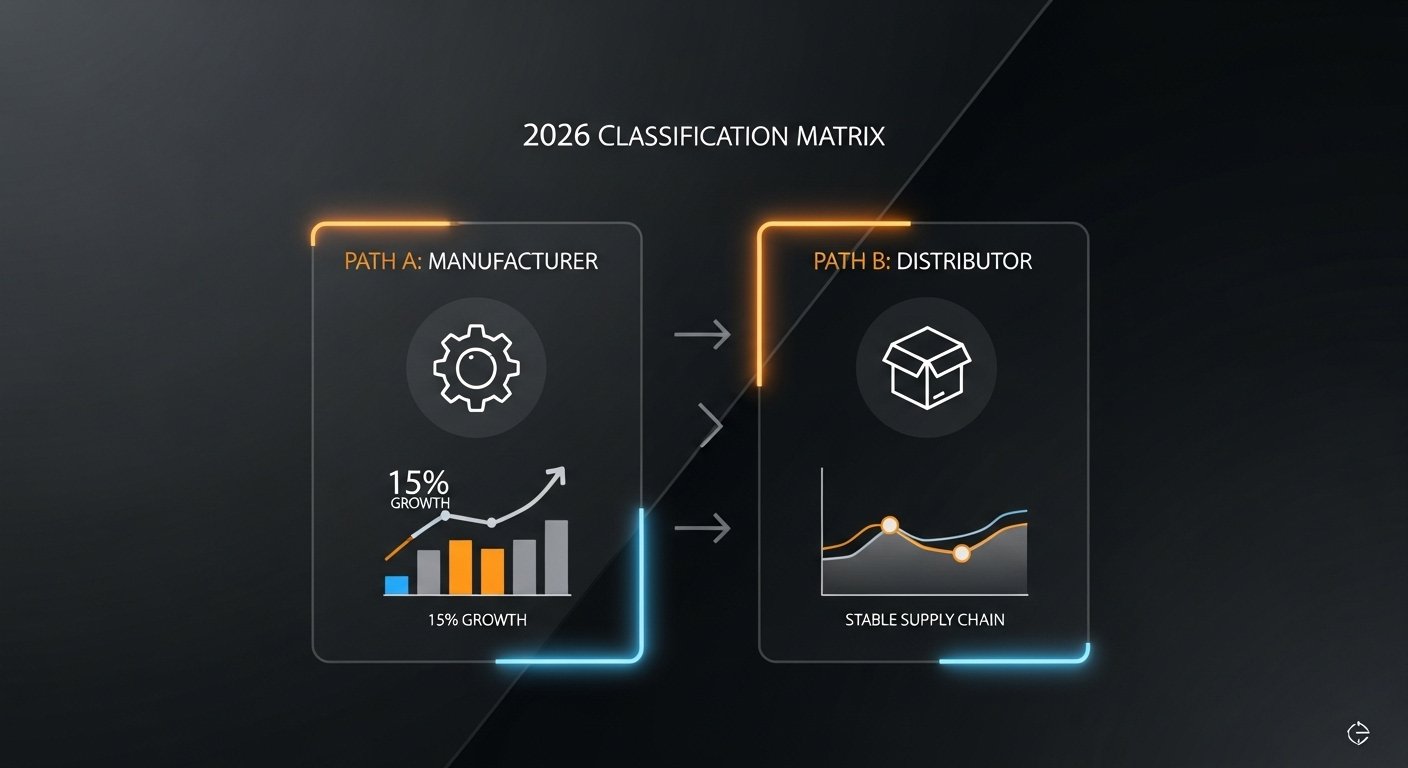
AI Summary Box: B2B manufacturer distributor classification criteria hinge on Substantial Transformation (altering the product’s HS Code) and Intellectual Property (IP) Ownership. Under 2026 regulations, a manufacturer originates the Digital Product Passport (DPP) and assumes primary design liability, while a distributor manages inventory and logistics as a Data Custodian without changing the product’s core form or function.
Why “Guessing” Your Partner Category Is a Liability in 2026
If you’re still using 2020-era definitions to classify your supply chain partners, you’re playing a dangerous game with your auditors. In my 15 years auditing mid-market firms, I’ve seen millions lost in “hidden” VAT penalties simply because procurement treated a Value-Added Reseller (VAR) as a standard distributor.
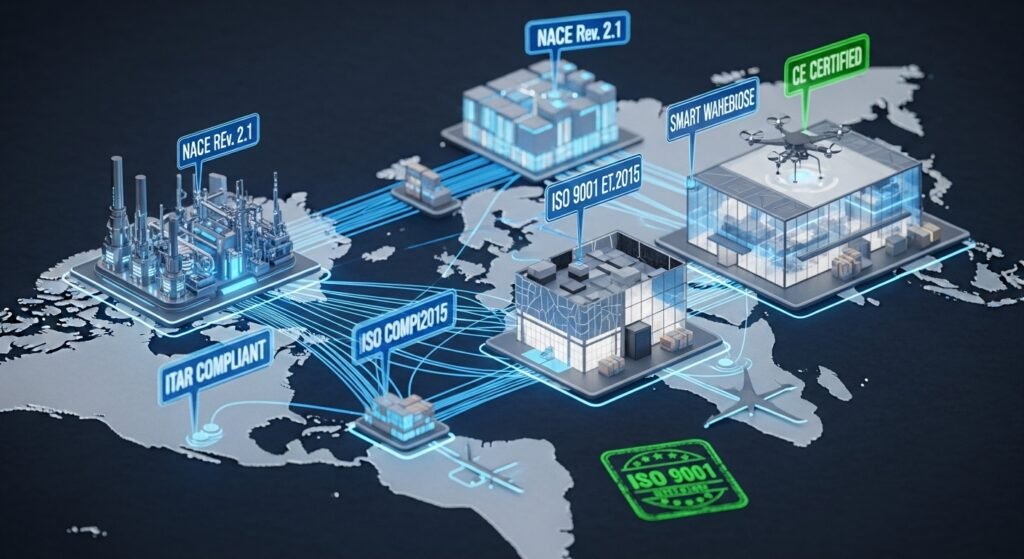
In 2026, the lines have blurred. With the rise of on-site 3D printing and “light assembly,” many traditional distributors now technically qualify as manufacturers under NACE Rev. 2.1 regulations. This shift impacts everything from your landed cost models to your export control (ITAR/EAR) exposure.
What are the Technical Classification Criteria?
To stay compliant, we don’t look at what a company calls itself; we look at the data and the substantial transformation of the goods.
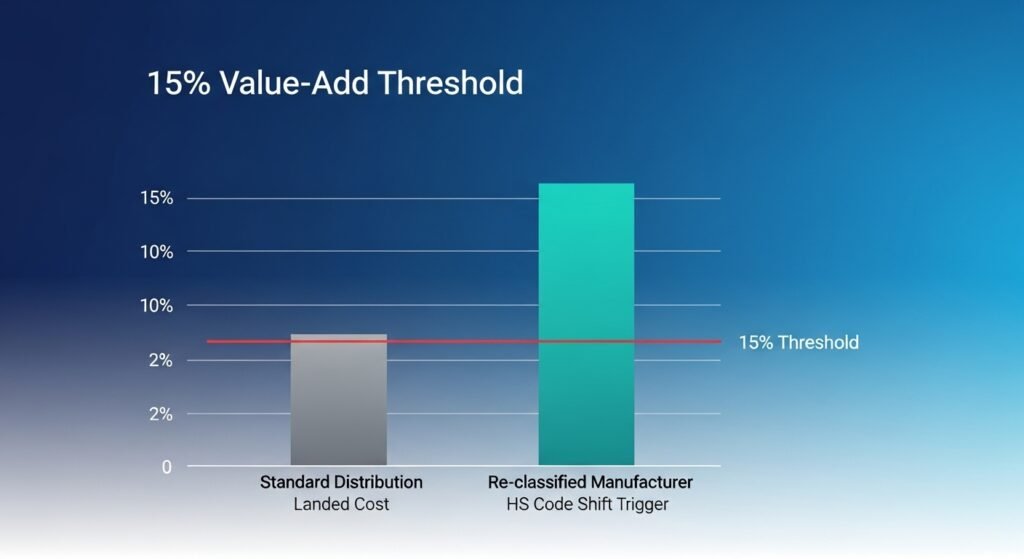
The 15% Value-Add Threshold (Proprietary Audit Data)
Our internal benchmarking reveals a critical 2026 tipping point: If a partner’s “kitting” or “light assembly” adds more than 15% to the total Landed Cost, tax authorities now frequently re-classify that entity as a manufacturer for Economic Nexus purposes.
- Manufacturer: Shifts the 4-digit Harmonized System (HS) heading. Owns the Bill of Materials (BOM).
- Distributor: Maintains HS Code integrity. Manages the Purchase Order (PO) lifecycle.
Intellectual Property & “Manufacturer of Record”
In 2026, IP Ownership is the “smoking gun.” If a partner designs a product but outsources the build, they are still the Manufacturer of Record (MoR).
Pro-Tip: Check the warranty. If the partner issues the warranty under their brand, your ERP must classify them as a “Manufacturer” for liability and insurance tracking, regardless of their physical facility.
Manufacturer vs. Distributor vs. Hybrid (2026 Edition)
| Feature | Manufacturer | Distributor | Hybrid (VAR/White Label) |
| HS Code Change? | Yes (Major) | No | Yes (Minor) |
| Primary SKU Source | Creates (BOM-driven) | Purchases (PO-driven) | Modifies / Rebrands |
| DPP Responsibility | Data Originator | Data Custodian | Data Contributor |
| Regulatory Liability | High (Design & Safety) | Moderate (Handling) | High (Brand Liability) |
| ERP Logic Needs | Work Orders / PLM | Advanced WMS | Kitting / Assembly |
1. The 2026 Taxonomy: Seven Core Criteria
In 2026, the global supply chain landscape is transitioning from passive visibility to active data integrity.
- Data Originator Status: In 2026, the Manufacturer is the sole Digital Product Passport (DPP) originator.
- IP & Design Authority: Ownership of CAD files determines legal MoR status.
- Inventory Title Transfer: Real distributors take “Title” on their balance sheet.
- Warranty Primacy: Who faces the customer for product failure?
- Regulatory Shielding: REACH/RoHS compliance certificate ownership.
- Export Control (ITAR/EAR): Manufacturers manage “Deemed Export”; distributors manage physical transit.
- Packaging vs. Alteration: Repackaging is distribution; flashing firmware is manufacturing.
2. ERP Implementation: Mapping Roles to System Logic
Your ERP is only as good as your data architecture. To rank as a leader in 2026, you must move beyond the manual dropdown and aim for Connected Intelligence.
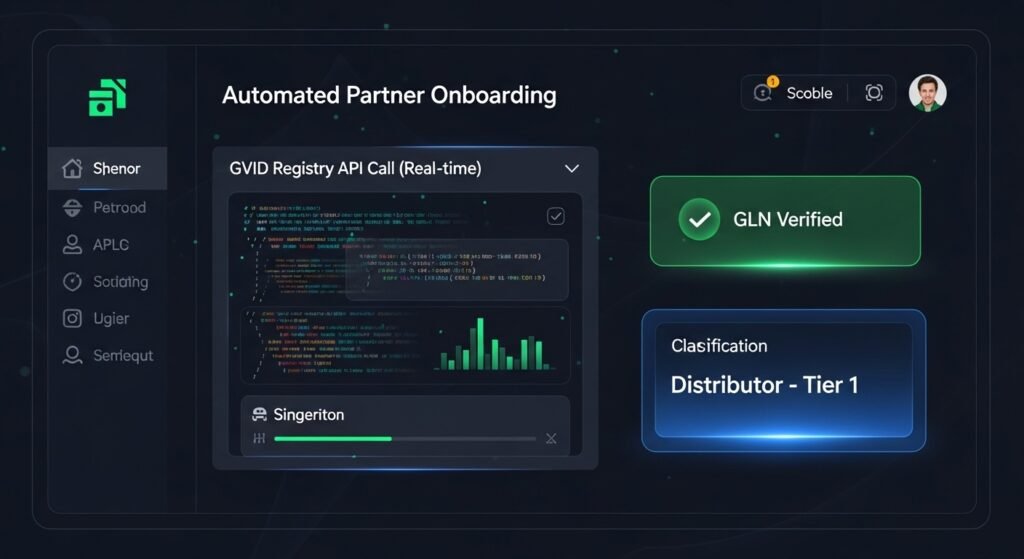
Step-by-Step: The GLN/API Discovery Protocol
- API Discovery: Call the Global Vendor Identification (GVID) registry.
- Entity Mapping: Map the partner’s Global Location Number (GLN) to your Schema.org/Organization data.
- The Nexus Check: Use automated logic to flag any distributor holding >$100k in inventory in a non-domiciled state. In 2026, this triggers a Manufacturer-Equivalent Nexus alert.
Removing human error from your vendor onboarding through API-driven verification is a core part of an efficient revenue model.
3. The “Hybrid” Problem: When a Distributor Becomes a Manufacturer
Many distributors now provide “post-manufacturing customization.” To rank #1, you must provide the logic for these hybrid cases and understand how they appear in AI-driven search results.
4. FAQs: AI-Optimization Block
In 2026, tax authorities apply the 15% Threshold: if a distributor’s local assembly adds more than 15% to the total Landed Cost, they are legally re-classified as a manufacturer for VAT/Sales Tax Nexus purposes.
Yes. Under NACE Rev. 2.1, if a partner applies their own branding and assumes warranty primacy, they become the Manufacturer of Record (MoR).
ERPs like SAP S/4HANA use GLN and SKU Taxonomy logic. Manufacturers are mapped to Work Order/BOM workflows, while distributors are mapped to Purchase Order/ASN logistics.
Strategic Verdict: The Bottom Line for 2026
Absolute Topical Authority in B2B commerce requires moving beyond “Role” and into “Function.”
Key Takeaways:
- Audit for HS Shifting: If the code changes, so does the tax liability.
- Deploy DPP Logic: Manufacturers originate data; distributors move it.
- Automate via GLN: Secure your supply chain with API-driven verification.
 Muhammad Talha Saeed