
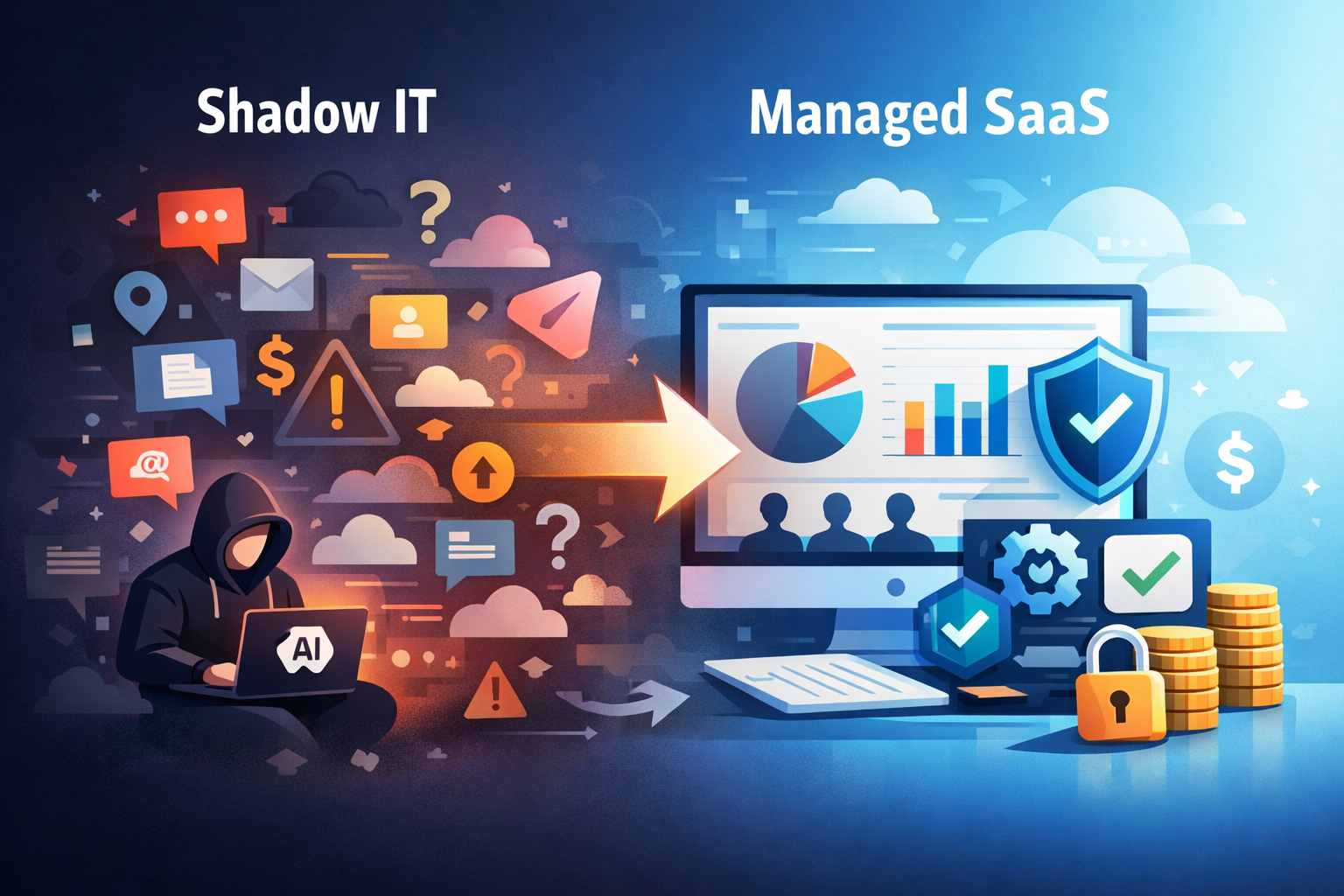
Managing a SaaS portfolio in 2026 is no longer a “nice-to-have” IT project. It is a financial and security imperative. Most organizations are currently flying blind, operating under the illusion that their spreadsheets or legacy tools are providing a clear picture.
The reality? According to the Gartner Market Guide for SaaS Management Platforms, most companies are overspending on SaaS by 25% or more, while “Shadow AI”—the unauthorized use of LLM subscriptions—is creating security backdoors faster than IT can patch them.
What is SaaS Management? (Beyond the Definition)
At its core, SaaS Management is the business practice of proactively governing the entire lifecycle of cloud software. While many view it as a simple “inventory check,” elite organizations treat it as a three-pillared discipline:
- Complete Visibility: Knowing every app, who owns it, and how much it costs.
- Continuous Optimization: Pruning unused licenses and rightsizing contracts based on actual usage data.
- Lifecycle Governance: Establishing a repeatable “Sourcing Policy” so software doesn’t just “appear” on a corporate credit card.
We are seeing a massive shift toward SaaSOps (SaaS Operations). This isn’t just about tracking; it’s about the automation of onboarding, offboarding, and vendor risk assessments.
💡 Expert Perspective: The “Shadow AI” Crisis
“In the last 18 months, the biggest risk to the enterprise hasn’t been traditional Shadow IT; it’s been ‘Shadow AI.’ Employees are piping proprietary company data into unvetted AI tools to increase productivity. Without an API-based discovery method, these tools remain invisible to IT until a data leak occurs.” — Senior SaaS Strategist
To stay ahead of unmanaged software risks, check out our deep dive on how to build a high-converting AI SaaS content strategy that aligns with your governance goals
The 5-Step SaaS Management Maturity Model
You cannot go from “Spreadsheet Chaos” to “Automated Excellence” overnight. Use this roadmap to benchmark your progress.
Level 1: Visibility (The Discovery Phase)
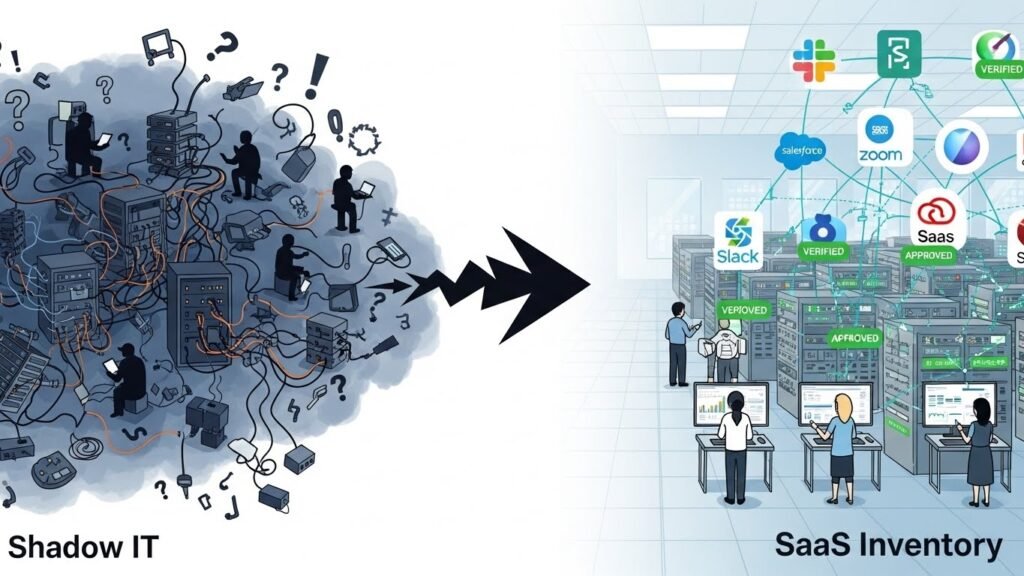
The first goal is Application Inventory Mapping. You cannot manage what you cannot see. Most organizations find 3x more apps than they expected once they move beyond manual tracking.
- The Goal: Connect to your SSO (Okta/Azure AD) and Financial systems (NetSuite/Expensify) to see the full stack.
Level 2: Optimization (License Rightsizing)
Once you have the list, look at License Optimization. Recent data from the State of SaaS Management Index suggests that nearly 30% of licenses in an average enterprise go completely unused.
- Pro-Tip: Don’t just look at “Logins.” Look at “Feature Usage.” A user who logs in but never uses the core functionality is a prime candidate for a lower-tier license.
Level 3: Governance (The Sourcing Policy)
Establish a SaaS Governance framework. This means creating a “front door” for new software requests. If an employee wants a new project management tool, they should check the Application Inventory first.
Level 4: Automation (SaaSOps)
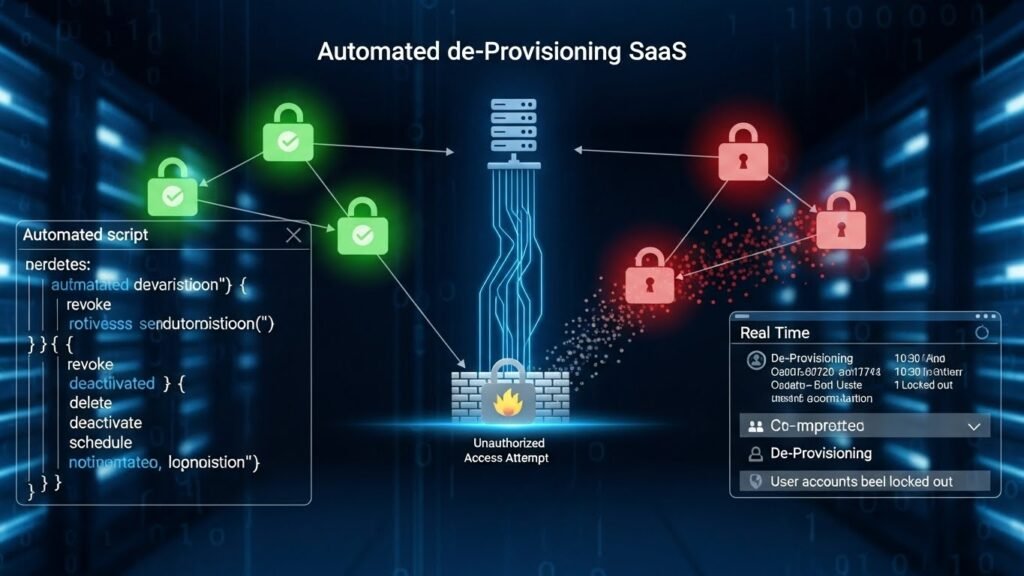
This is where you integrate your SaaS Management Platform (SMP) with your HRIS. When an employee leaves, the system automatically triggers De-provisioning Workflows.
Level 5: Value Realization
The final stage is moving from “Cost Savings” to “Value.” You are measuring if the software is actually driving the business outcomes promised.
Technical Deep-Dive: Discovery Methods Compared
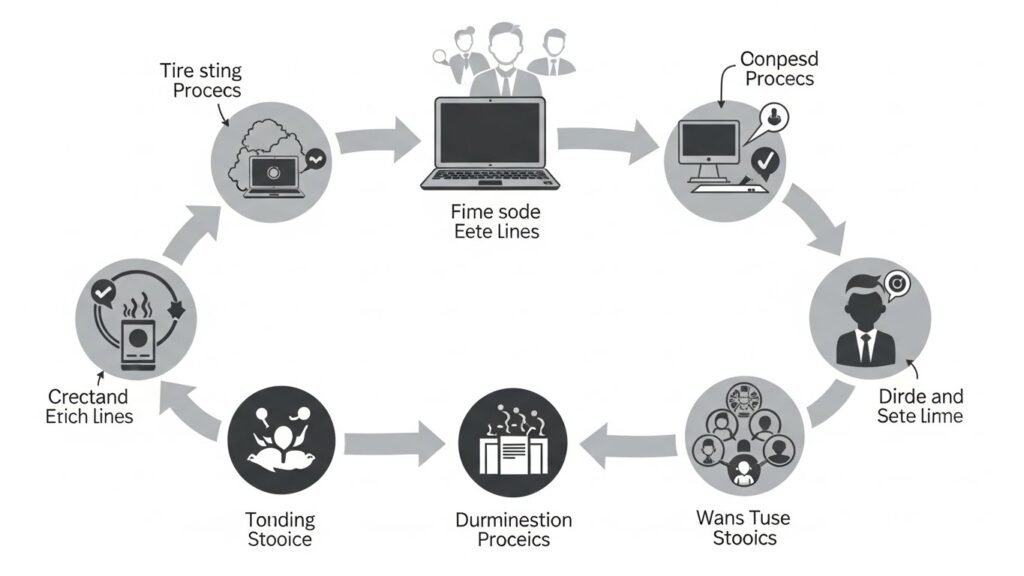
Not all discovery methods are equal. According to IDC’s Worldwide Software Tracker, SaaS spend has officially surpassed on-premise software, making deep discovery essential.
| Method | Depth of Insight | Effort | Best For |
| Financial/ERP Scan | High (Spend) | Low | Finding hidden costs and Shadow IT. |
| SSO Integration | High (Usage) | Medium | Tracking login frequency and security. |
| API-Direct | Very High (Granular) | High | Deep license optimization (Pro vs. Basic). |
SaaS Spend Management: Turning Waste into Innovation Capital
For the CFO, SaaS management is a SaaS Spend Management play. The average enterprise wastes millions on Redundant Functional Mapping.
The Scenario: One department uses Miro, another uses Lucidchart, and a third uses Canva.
The Solution: Consolidate. By narrowing your stack, you increase your bargaining power.
The SaaS Renewal Calendar
Stop being surprised by auto-renewals. A strategic SaaS Renewal Calendar should trigger alerts at specific intervals:
- 90 Days Out: Begin a usage audit. Do we still need this many seats?
- 60 Days Out: Check market benchmarks. Are we overpaying?
- 30 Days Out: Finalize negotiations.
Optimizing costs requires a strategic approach; learn more about leveraging AI for SaaS growth to maximize your software ROI.
Security & Compliance: Closing the “Zombie Access” Gap
A robust SaaS strategy is a security strategy. During a Vendor Risk Assessment, you must verify AICPA SOC 2 Compliance Standards and GDPR compliance.
The most common security hole is the offboarding gap. According to the IBM Cost of a Data Breach Report, credential theft remains a top attack vector. Leaving “Zombie Access” active is an open invitation to hackers.
Ready to scale your reach? Explore our specialized SaaS content writing services to establish your brand as a market leader.
Pro-Tip: Use a tool that offers “Automated Reclamation.” If a user hasn’t touched an app in 30 days, harvest that license and put it back in the pool.
Strategic Solution: The Path Forward
The status quo of “managing by fire” is unsustainable. To gain control, you need a centralized system of record that bridges the gap between IT, Finance, and Procurement.
Next Steps for Your Team:
- Conduct a 30-day “Shadow IT” audit using financial data.
- Centralize all contracts into a single renewal calendar.
- Identify the top 5 most expensive apps and run a deep usage analysis.
FAQs
Q: What is SaaS management?
A: SaaS management is the business practice of proactively monitoring and optimizing the purchasing, onboarding, licensing, and security of Software-as-a-Service applications. It focuses on reducing “Shadow IT” and ensuring every subscription delivers measurable ROI through a centralized system of record.
Q: How do you reduce SaaS spend?
A: You can reduce SaaS spend by conducting a redundancy audit to eliminate overlapping tools, identifying and harvesting unused licenses, and using a renewal calendar to negotiate contracts 90 days in advance based on actual usage data.
Q: What is Shadow IT in SaaS?
A: Shadow IT refers to any software or cloud service purchased or used by employees without the explicit approval or oversight of the IT department. This creates significant security vulnerabilities and leads to unmanaged financial waste.
Q: What is a SaaS Management Platform (SMP)?
A: An SMP is a specialized tool that integrates with SSO, financial, and HR systems to provide a unified view of an organization’s software stack. It automates license discovery, usage tracking, and employee offboarding workflows.
Q: Why is SaaS governance important?
A: SaaS governance ensures that all software acquisitions meet security, legal, and budgetary standards. It prevents “Shadow AI” risks, ensures SOC2/GDPR compliance, and aligns software investments with the company’s strategic business objectives.
Author Bio
Muhammad Talha Saeed, Senior SaaS Strategist & Founder of The Growth Lens With over a decade of expertise in SaaSOps and digital transformation, Muhammad Talha Saeed specializes in helping organizations streamline software ecosystems and optimize cloud spend. As the strategic mind behind thegrowthlens.blog, he bridges the gap between technical IT infrastructure and high-level financial efficiency to drive sustainable business growth.
{
  "@context": "https://schema.org",
  "@type": "FAQPage",
  "mainEntity": [
    {
      "@type": "Question",
      "name": "What is SaaS management?",
      "acceptedAnswer": {
        "@type": "Answer",
        "text": "SaaS management is the business practice of proactively monitoring and optimizing the purchasing, onboarding, licensing, and security of Software-as-a-Service applications."
      }
    },
    {
      "@type": "Question",
      "name": "How do you reduce SaaS spend?",
      "acceptedAnswer": {
        "@type": "Answer",
        "text": "Reduce spend by conducting redundancy audits, harvesting unused licenses, and using a renewal calendar to negotiate contracts 90 days in advance."
      }
    },
    {
      "@type": "Question",
      "name": "What is Shadow IT in SaaS?",
      "acceptedAnswer": {
        "@type": "Answer",
        "text": "Shadow IT is software used by employees without IT approval, creating security risks and unmanaged financial waste."
      }
    }
  ]
}