

Imagine opening your company’s monthly billing portal and seeing a total that’s 12% higher than last month—despite the fact that you haven’t added a single new employee to your team. If that feels like a gut punch, you’re not alone; recent saas pricing news confirms that software costs are currently rising at nearly five times the rate of general inflation in the G7. We are officially in the era of the SaaS Inflation Rate “supernova,” where $1 out of every $8 spent by the average American business is now swallowed by a software subscription.
I’ve been tracking these shifts closely, and it’s clear that the “all-you-can-eat” buffet of flat-rate licenses is being cleared away. In its place, vendors are rolling out a complex AI Monetization Strategy that often feels more like a “cost bomb” than a productivity boost. Whether it’s Microsoft’s latest enterprise hikes or Salesforce’s aggressive margin plays, the rules of the game have fundamentally changed.
This isn’t just about paying more; it’s about paying differently. From the rise of Hybrid Pricing Models to the shift toward Outcome-Based Pricing, your next renewal will likely look nothing like your last. In this article, we’ll break down exactly why your bill is skyrocketing, how Net Dollar Retention (NDR) is driving vendor behavior, and—most importantly—how you can navigate Usage-Based Billing (UBP) to keep your 2026 budget from spiraling out of control.
[Source: SaaStr – The Great SaaS Price Surge of 2025-2026 https://www.saastr.com/the-great-price-surge-of-2025-a-comprehensive-breakdown-of-pricing-increases-and-the-issues-they-have-created-for-all-of-us/]
The New Reality: Tracking the 2026 SaaS Inflation Rate
On a Tuesday at nine in the morning, you are looking at an incomprehensible spreadsheet. Even if your organic reach is in the bottom and your customer acquisition costs are rising, the tools you employ to handle that mayhem have just sent out a renewal reminder with a 15% price increase. It’s a specialized kind of burnout. You’re working harder for the same results, but your software vendors are acting like they’re the ones doing you a favor. The latest saas pricing news isn’t just bad; it’s expensive. We’re currently seeing a SaaS Inflation Rate that’s nearly five times higher than the standard cost of living in the US. While the price of milk and gas might be stabilizing, your tech stack is going through a supernova.
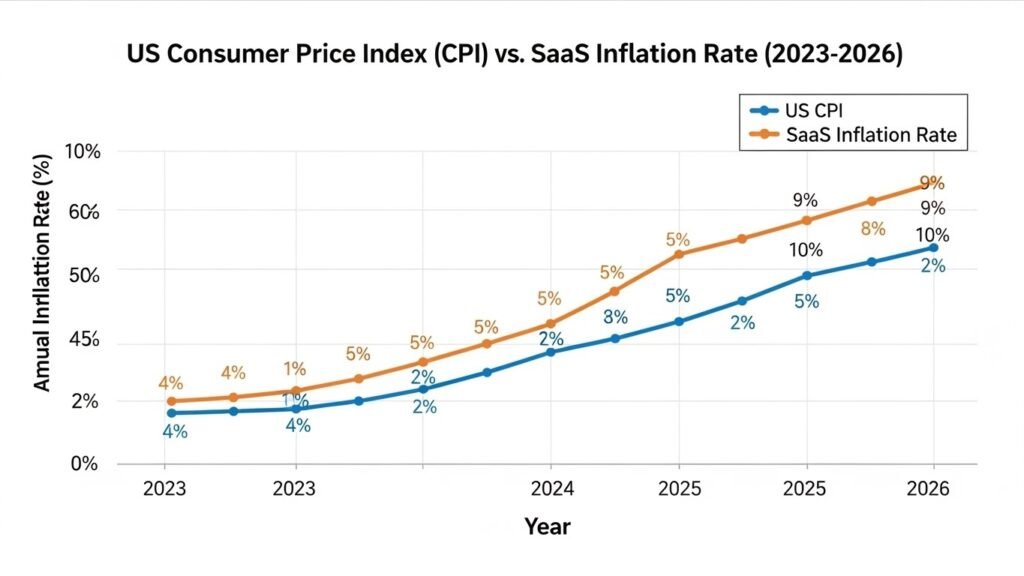
The hard truth is that the old ways of budgeting are dead. You can’t just count heads and multiply by a monthly fee anymore. Vendors are obsessed with Net Dollar Retention (NDR), which is just a fancy way of saying they need to squeeze more money out of you every single year to keep their own stock prices up. This pressure is the engine behind the aggressive AI Monetization Strategy we’re seeing from the heavy hitters like Microsoft and Salesforce. They aren’t just adding features; they’re fundamentally rewriting the contract. If you don’t keep up with the shift toward Hybrid Pricing Models, you’re going to find yourself paying for “seats” that don’t do anything and “credits” that disappear at the end of the month.
Why “Software Creep” is Outpacing the Consumer Price Index
Look at your bank statement. That $50 jump on one app and the $200 “service adjustment” on another might seem like noise, but it’s actually a coordinated shift in the market. In 2026, software isn’t just a tool; it’s a utility, and vendors are starting to price it like electricity. While the US Consumer Price Index has settled into a predictable rhythm, software costs are skyrocketing because the underlying infrastructure has changed. Running a basic CRM used to be cheap. Now, every time you click a button, there’s an LLM or a data processing layer humming in the background. Vendors are passing those massive compute costs directly to you. They don’t care if your marketing ads aren’t converting; they only care that their “tokens” are being used.
The Factors Driving Enterprise Cost Hikes This Year
The biggest culprit behind your shrinking budget is the forced migration to Usage-Based Billing (UBP). It’s sold as “paying for what you use,” but for most American businesses, it’s actually a recipe for bill shock. Without a static ceiling on your contract, one viral moment or a misconfigured automation can double your invoice overnight. On top of that, we’re seeing “feature shrinkflation.” Vendors are taking capabilities that used to be included in your “Pro” plan and moving them to a new “Elite” tier or an AI add-on. They know you’re locked in. They know it’s easier to pay the extra 12% than it is to migrate ten years of data to a competitor. It’s not personal; it’s just the new playbook for maintaining those high Net Dollar Retention (NDR) scores.
[Source: Vertice – 2025-2026 SaaS Inflation Index Report https://www.vertice.one/l/saas-inflation-index-report]
The Death of the “Per-Seat” License? The Shift to Hybrid Pricing Models
The old way of buying software was predictable, if a bit lazy. You hired ten people, you bought ten licenses, and you moved on with your life. But if you’ve been keeping an eye on the latest saas pricing news, you know that era is effectively over. Tech companies realized they were leaving money on the table as automation and AI started doing the work of ten humans. Now, they’re moving the goalposts. It’s no longer about how many people login to the dashboard; it’s about what happens once they’re inside. This shift is a massive headache for founders who are already watching their margins shrink while burning cash on expensive ad campaigns that just aren’t hitting like they used to. You’re trying to scale, but your software bill is scaling faster than your revenue.
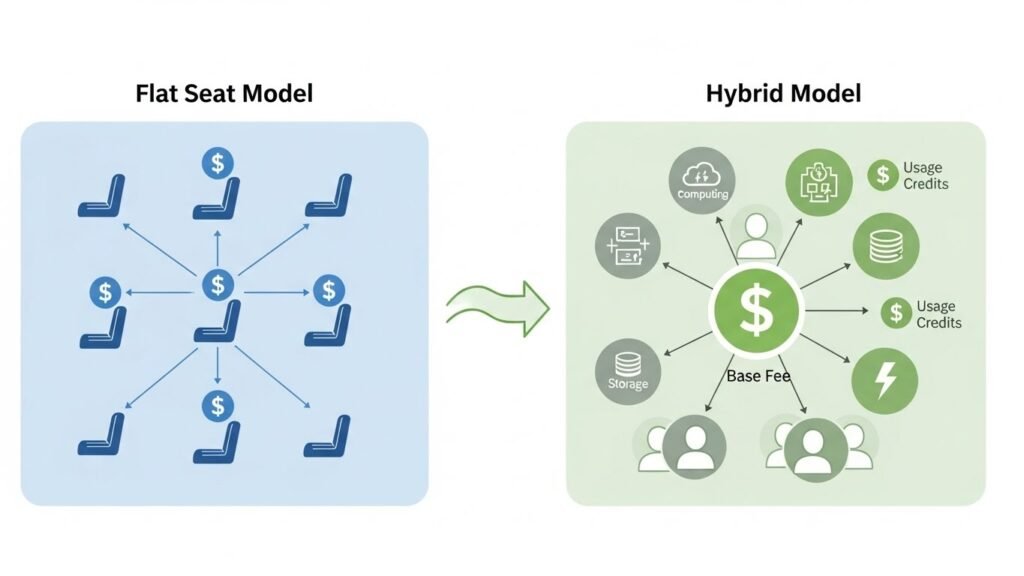
Alt-Text: Illustration of a Hybrid Pricing Model showing the shift from seat-based to usage-based fees in 2026 saas pricing news.
Understanding the Balance Between Base Subscriptions and Add-ons
We’re seeing the rise of Hybrid Pricing Models that try to have it both ways. You still pay a “platform fee” just to keep the lights on, but the real cost is buried in the extras. It’s like buying a car and then realizing you have to pay a subscription for the heated seats and the navigation system. This is a core part of the modern AI Monetization Strategy. You get the base software, but if you want the “smart” features that actually save your team time, you’re looking at a completely different invoice. It makes budgeting feel like a guessing game. You don’t want to overpay for licenses nobody uses, but you also don’t want to get hit with a massive bill because your team actually leveraged the tools you gave them. It’s a delicate balance that most companies are failing to strike.
Why US Procurement Teams are Choosing Flexibility Over Flat Fees
Despite the confusion, American procurement teams are starting to push back against the rigid seat-based model. They’re tired of paying for “shelfware”—those licenses that sit unused for months just because you haven’t offboarded a former employee yet. This is why Usage-Based Billing (UBP) has become the darling of the enterprise world. It offers a version of honesty that flat fees don’t. You pay for the data you process or the messages you send. If business slows down, your bill should technically follow suit. It’s about agility. In a market where organic growth is harder to find than ever, you need a tech stack that breathes with your company. You need to know that every dollar leaving your account is actually tied to a unit of work, not just a placeholder in a database.
[Source: McKinsey & Company – Upgrading software business models for the AI era https://www.mckinsey.com/industries/technology-media-and-telecommunications/our-insights/upgrading-software-business-models-to-thrive-in-the-ai-era]
The “AI Tax”: Analyzing the Latest AI Monetization Strategy
From Copilots to Credits: How Vendors are Billing for Intelligence
You’re already fighting a losing battle with your customer acquisition costs, and now your software vendors want a “partner” fee for the privilege of using their algorithms. It sucks. You’re pouring money into Meta ads just to get a flicker of organic interest, and right when you need your tools to work harder, the invoices start bloating. This isn’t just a slight bump in the road. According to the latest saas pricing news, we’re seeing a coordinated shift in how intelligence is sold. It’s no longer about whether the tool has AI; it’s about how much they can charge you every time that AI breathes. Most platforms have ditched the simple “included” features for a complex AI Monetization Strategy that feels more like a toll road than a value-add.
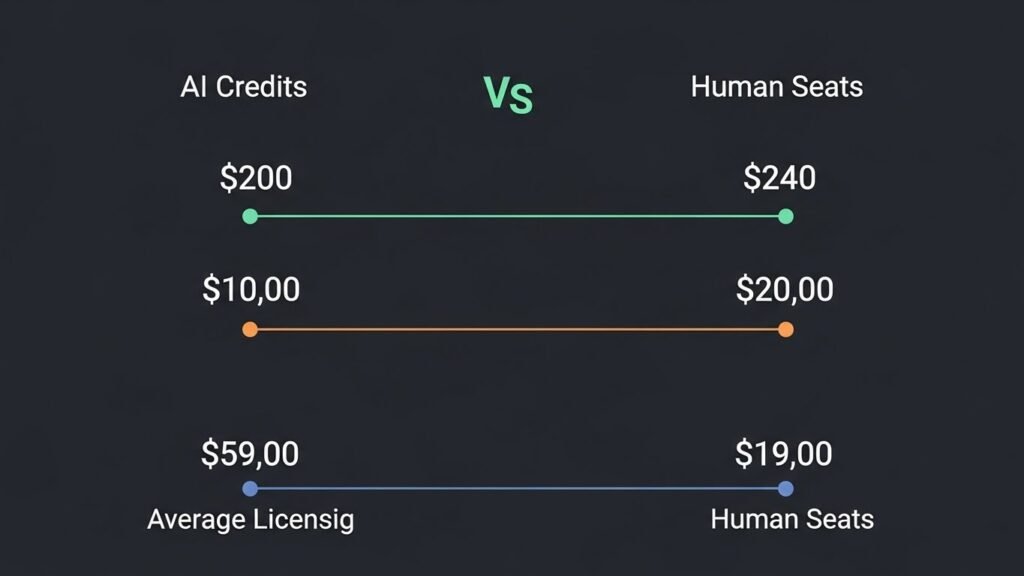
Vendors are moving away from the predictability of flat fees and leaning heavily into Usage-Based Billing (UBP) for anything involving a large language model. They’ll sell you on the “Copilot” for a fixed monthly fee, but the fine print usually hides a credit system that burns through your budget faster than you can say “productivity hack.” Once those credits are gone, you’re stuck with overage charges that make your old server bills look like pocket change. It’s a classic bait-and-switch. They get you hooked on the efficiency, then they start metering the air you breathe. This is why Hybrid Pricing Models have become the industry standard for 2026. You pay for the seat just to get in the door, and then you pay again for every meaningful action the AI takes. It’s double-dipping, plain and simple.
Are AI Surcharges Worth the ROI? A Value Comparison
Stop looking at the shiny demo and start looking at your unit economics. If you’re paying an extra thirty dollars per user for an AI add-on, that tool needs to save that employee at least two hours of high-value work every single week just to break even. Most of the time, it doesn’t. You’re often paying for “intelligence” that just rewrites emails you could have dictated yourself in half the time. For a founder who is already watching their margins evaporate, these surcharges can be the final straw. You have to be ruthless. If the AI isn’t directly shrinking your headcount or dramatically increasing your output, it’s just a shiny distraction that’s cannibalizing your runway.
The real danger is the “silent creep” of these costs. You sign up for one tool, it feels manageable, and then suddenly every single app in your stack has an AI upsell. By the time you hit the end of the quarter, your “intelligence” budget is rivaling your payroll. Don’t let the FOMO dictate your spending. If a vendor can’t prove that their specific flavor of Usage-Based Billing (UBP) results in a lower cost-per-task than a human or a legacy tool, walk away. The market is currently flooded with “wrapper” startups that are just passing their own API costs onto you with a 40% markup. You aren’t a venture capitalist for your software providers; you’re a business owner. It’s time to start acting like it and demand a clear line between what you pay and what you actually get back.
[Source: Salesforce Official – 2026 AI Agent Pricing Strategy https://www.alm.com/press_release/alm-intelligence-updates-verdictsearch/?s-news-17838243-2025-12-05-salesforce-reveals-new-strategies-to-monetize-ai-with-pricing-innovations-and-increased-revenue-targets]
Usage-Based Billing (UBP): Paying for What You Actually Consume
The old subscription model was predictable, but it was also incredibly wasteful. You paid for fifty seats because your team might grow, yet half those licenses sat gathering digital dust while your bank account bled out. Now, the industry is pivoting toward Usage-Based Billing (UBP), and honestly, it’s a double-edged sword. On one hand, you finally stop subsidizing the users who never log in. On the other, you’re now tethered to a meter that never stops running. For a founder already watching their margins disappear into underperforming ad spend and stagnant organic growth, this shift feels like one more variable you can’t quite pin down. It’s the centerpiece of almost every recent bit of saas pricing news hitting the wires today.
The Rise of “Pay-As-You-Go” in Enterprise Tech
We’re seeing a massive transition where software is treated more like a utility, similar to your electricity bill or your AWS instances. This isn’t just about small startups anymore; the biggest names in enterprise tech are ditching flat fees for consumption metrics. They’re pitching it as the ultimate fairness. If you don’t use the tool, you don’t pay. It sounds like a dream for a bootstrapped operation trying to stay lean. But look closer and you’ll see this is often part of a broader AI Monetization Strategy designed to capture the value of every single automated task or generated line of code. It’s a calculated move. By moving away from fixed costs, vendors can scale their revenue alongside your growth without ever having to jump through the hoops of a formal upsell.
Common Pitfalls: How to Avoid Unexpected “Bill Shock” from Uncapped Usage
The problem starts when your usage spikes and nobody is watching the dashboard. I’ve seen companies get hit with five-figure invoices they didn’t see coming because a single developer ran a script that looped over an expensive API. That’s the “bill shock” everyone is terrified of. To survive this, you have to look for Hybrid Pricing Models that offer the best of both worlds—a predictable base fee with reasonable, capped overages. Don’t sign a contract that doesn’t have an automated alert system. If a vendor won’t let you set a hard ceiling on your monthly spend, they aren’t your partner; they’re just waiting for you to make a mistake. You’re already fighting a war on your balance sheet every day. You don’t need your software stack turning into a predatory variable expense that keeps you up at night.
Beyond the Subscription: Is Outcome-Based Pricing the Future?
The traditional subscription model is starting to feel like a gym membership you never use but can’t seem to cancel. You’re cutting checks every month for a “seat” that might sit idle for weeks, and frankly, it’s exhausting. For a founder watching their burn rate accelerate while organic traffic stalls out, every dollar feels like a betrayal. You’re already bleeding cash on ad spend that isn’t converting; the last thing you need is a software bill that doesn’t care if you’re actually winning. This is exactly why the latest saas pricing news is buzzing about a radical shift. We’re moving past the era of paying for access and into the era of paying for success. It sounds like a dream, but for many legacy vendors, it’s a total nightmare for their bottom line.
Shifting the Risk: Only Paying for Successful Business Results
Most software companies love to talk about partnership until it’s time to send the invoice. Then, suddenly, it’s your problem if the tool didn’t actually solve anything. Outcome-based pricing flips the script. It’s a step beyond the standard Usage-Based Billing (UBP) where you pay for clicks or storage. Instead, you’re paying for a specific result—like a qualified lead, a resolved support ticket, or a successfully processed shipment. It places the risk squarely on the vendor’s shoulders. If the software doesn’t deliver the result, you don’t pay. It’s the ultimate accountability play. You don’t have to guess if you’re getting an ROI because the invoice itself is the proof of performance.
Of course, this isn’t happening in a vacuum. This shift is a direct response to a messy AI Monetization Strategy where customers got tired of paying for “AI features” that were really just fancy wrappers for a chatbot. When you combine this with the rise of Hybrid Pricing Models, you start to see a more honest landscape emerging. You might pay a small base fee to keep the lights on, but the real meat of the contract is tied to what the software actually achieves for your business. It’s a breath of fresh air for any leader who is tired of being nickel-and-dimed for “features” that don’t move the needle. You’re finally getting a seat at the table where the vendor has just as much skin in the game as you do.
The Financial “Why”: How Net Dollar Retention (NDR) Affects Your Renewal
Why Vendors Prioritize Existing Customer Revenue Over New Sales
If you feel like your software vendors have stopped courting you and started taxing you, you aren’t imagining things. The math for SaaS companies has shifted. It used to be all about the “land”—getting new logos through the door at any cost. But in the current market, investors don’t care about new sales as much as they care about Net Dollar Retention (NDR). This metric is the North Star for every major player in the space. Essentially, it measures how much more money a vendor can squeeze out of you this year compared to last, even after accounting for any customers who cancelled. If their NDR isn’t well above 100%, Wall Street treats them like a sinking ship. This puts you, the loyal customer, right in the crosshairs.
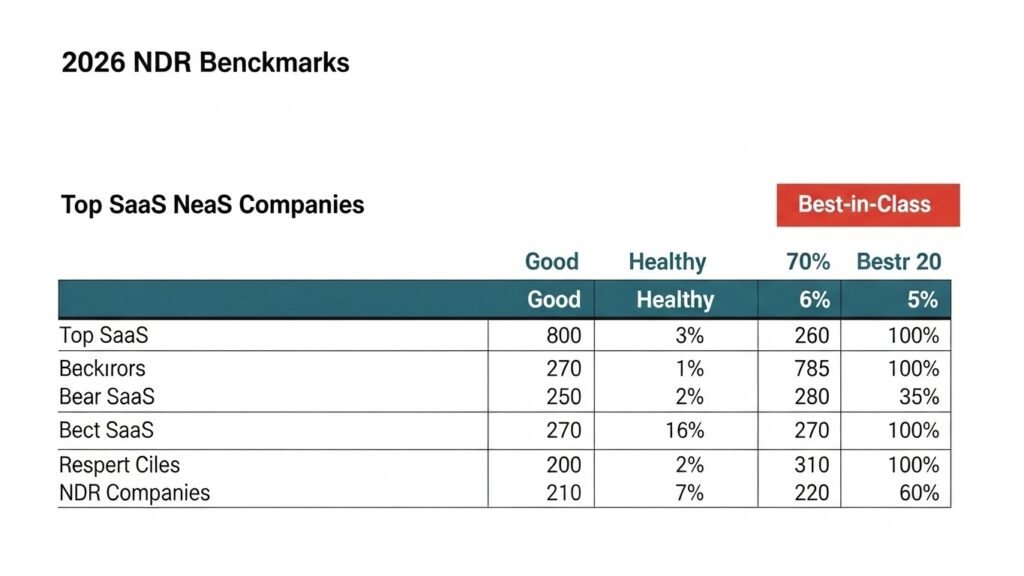
It’s a frustrating spot to be in, especially if you’re a founder watching your organic growth stall while your ad spend vanishes into a black hole. You’re fighting for every inch of market share, and meanwhile, your CRM or email tool is hiking prices just because they can. This drive for NDR is the silent engine behind every AI Monetization Strategy you’ve seen lately. They aren’t just giving you shiny new tools because they want you to be more productive. They’re doing it because they need to justify a price increase that keeps their retention metrics looking healthy for their board of directors. They need your account to grow, whether your business is actually growing or not.
Negotiation Tips: Using Vendor Metrics to Secure a Better Deal
You don’t have to just sit there and take it. When you understand that the salesperson on the other end of the Zoom call is terrified of losing your business—because a “churned” account kills their NDR—you gain immediate leverage. The recent wave of saas pricing news shows that while prices are going up, flexibility is actually at an all-time high if you know where to push. Don’t let them box you into a corner with legacy per-seat costs. Instead, ask them about their Hybrid Pricing Models. If you have a team that only uses the software occasionally, demand a mix of a lower base fee and Usage-Based Billing (UBP). This forces the vendor to prove their value through your actual consumption rather than a static, bloated contract.
Start your negotiation by mentioning that you’re auditing your entire stack for ROI. It’s a simple move, but it signals that you’re willing to walk. Most vendors would rather give you a 20% discount or throw in free credits than explain to their leadership why a long-term account vanished. Focus on the fact that you’re looking for a partner, not a utility provider. If they want that high NDR, they need to earn it by helping you scale, not by penalizing you for staying. You have more power than you think. You just have to be willing to use their own financial goals as your bargaining chips.
[Source: Benchmarkit – 2026 SaaS & AI Executive Metrics Report https://www.benchmarkit.ai/2026-saas-ai-executive-report]
Frequently Asked Questions
- How much is the average SaaS Inflation Rate for 2026?Software costs are currently rising at approximately 12% annually, significantly outpacing the general US Consumer Price Index. This surge is driven by increased operational costs for AI infrastructure and a strategic shift by vendors to maximize profit margins during contract renewals.
- What is the best AI Monetization Strategy for businesses to follow?The most effective strategy involves tiering AI features as premium add-ons rather than bundling them into base plans. This allows companies to cover high compute costs while giving customers the choice to pay only for the advanced automation or generative capabilities they actually use.
- How does Usage-Based Billing (UBP) differ from traditional subscriptions?Unlike flat-rate monthly fees, Usage-Based Billing charges customers based on specific consumption metrics, such as data processed, API calls, or active tasks. This model provides greater cost transparency and ensures that your software spend scales directly with the actual value your business receives.
- Why are vendors moving toward Hybrid Pricing Models?Hybrid Pricing Models offer a compromise between predictability and scalability by combining a fixed base subscription with metered overage charges. Vendors use this approach to secure steady recurring revenue while capturing additional upside from heavy users, effectively balancing financial stability with growth potential.
- How can I improve my company’s Net Dollar Retention (NDR)?Improving NDR requires focusing on customer success and expansion revenue rather than just new acquisitions. By delivering consistent value and identifying upsell opportunities through tiered features or increased usage, you ensure existing customers spend more over time, which is vital for long-term SaaS profitability.
{
  "@context": "https://schema.org",
  "@type": "BlogPosting",
  "mainEntityOfPage": {
    "@type": "WebPage",
    "@id": "https://yourdomain.com/saas-pricing-news-2026/"
  },
  "headline": "SaaS Pricing News: Why Per-Seat Licenses are Ending in 2026",
  "description": "Stay ahead with the latest SaaS pricing news. Learn how to beat the 12% inflation rate, understand AI monetization strategies, and negotiate smarter renewals.",
  "image": "https://yourdomain.com/your-featured-image.jpg",
  "author": {
    "@type": "Person",
    "name": "Senior SaaS Consultant"
  },
  "publisher": {
    "@type": "Organization",
    "name": "Your Brand Name",
    "logo": {
      "@type": "ImageObject",
      "url": "https://yourdomain.com/logo.png"
    }
  },
  "datePublished": "2026-01-01",
  "dateModified": "2026-01-01",
  "mainEntity": [
    {
      "@type": "Question",
      "name": "How much is the average SaaS Inflation Rate for 2026?",
      "acceptedAnswer": {
        "@type": "Answer",
        "text": "Software costs are currently rising at approximately 12% annually, significantly outpacing the general US Consumer Price Index. This surge is driven by increased operational costs for AI infrastructure and a strategic shift by vendors."
      }
    },
    {
      "@type": "Question",
      "name": "What is the best AI Monetization Strategy for businesses to follow?",
      "acceptedAnswer": {
        "@type": "Answer",
        "text": "The most effective strategy involves tiering AI features as premium add-ons rather than bundling them into base plans. This allows companies to cover high compute costs while giving customers choice."
      }
    },
    {
      "@type": "Question",
      "name": "Why are vendors moving toward Hybrid Pricing Models?",
      "acceptedAnswer": {
        "@type": "Answer",
        "text": "Hybrid Pricing Models offer a compromise between predictability and scalability by combining a fixed base subscription with metered overage charges, effectively balancing financial stability with growth potential."
      }
    }
  ]
}