
Most SaaS founders and owners wake up every morning with the same nightmare: the product is extremely good, but it just isn’t selling, meaning there are no sales. The features are very solid, the UI is completely slick, and the development team is world-class. Yet the sales needle doesn’t move even an inch, meaning there are absolutely no sales. It feels like the product is beautifully displayed on a digital shelf, but there is no one willing to pick it up.
The truth? The old-school, aggressive “boiler room” tactics that used to dominate the US tech scene are officially obsolete. Today’s buyers aren’t looking for a pitch; they’re looking for a partner who can solve a specific, painful problem before the first invoice is even sent.
The modern SaaS sales engine has evolved into something far more sophisticated. It’s a delicate balance of Product-Led Growth (PLG), where your software does the heavy lifting, and high-touch Account-Based Marketing (ABM) for those lucrative enterprise contracts. To stay relevant in 2025, you have to master the art of the Freemium model to get your foot in the door, and then use a Land and Expand strategy to build a fortress around your accounts. In this guide, we’re going deep into the strategies that top-tier Sales Development Reps (SDRs) are using to skyrocket Customer Lifetime Value (CLV) without burning out your team. It’s time to stop chasing leads and start building a scalable sales machine.
The Shifting Landscape of SaaS Sales: Why Traditional Cold Calling is Dying
Let’s be honest: nobody likes getting a cold call. We have all, at some point in this era, gone through a situation where our phone rings, the number is unknown—meaning we don’t know the caller—and we already have an idea of what script we are about to hear or what new story will be told.
For years, Sales Development Reps (SDRs) were properly taught that sales is only a numbers game: just call as many people as possible, and sooner or later, someone will say yes and get persuaded by the talk. But in today’s US market, that’s not just annoying; it’s a waste of time. Buyers have higher walls up than ever, and their voicemail is their best friend. People want to find solutions on their own terms, which is why Product-led growth is taking over. When the software is good enough to speak for itself, you don’t need to shout over the phone to get noticed.
[Reference: HubSpot – The State of Inbound Sales Trends – https://www.hubspot.com/state-of-marketing]
Moving from “Always Be Closing” to “Always Be Adding Value”
The old “ABC” (Always Be Closing) mantra belongs in a 90s movie, not a modern tech company. Now, if you aren’t helping the customer before you ask for their credit card, you’ve already lost. High-performing teams are pivoting toward Account-based marketing because it focuses on building actual relationships with the right people. It’s about being a consultant, not a pusher. When you fully focus on solving a specific pain point (main point) instead of just hitting a quota, you aren’t just winning a deal you are setting the stage for a much higher Customer lifetime value.
Product-Led Growth (PLG) vs. Sales-Led: Finding Your Sweet Spot
Choosing between a PLG and a sales-led model isn’t about picking a side; it’s about understanding your user. If your software is a massive, complex enterprise tool, you’ll need a human to guide the way. But if it’s a tool that solves a daily headache, just let people in the door. American users, especially, have zero patience for “Book a demo to see pricing” buttons. They want to click around and see the magic for themselves. If the tool works, the sale happens naturally.
[Source: Forbes – Why Product-Led Growth Is The Future Of SaaS – https://www.forbes.com]
Why the Freemium Model is the New Business Card
In the SaaS world, a PDF brochure is basically junk mail. Your Freemium model is your real introduction. It’s the ultimate “try before you buy” that builds trust without a single awkward sales pitch. Think of it as a low-stakes first date. If a user gets value for free, the move to a paid plan isn’t a “pitch”—it’s just the next logical step. It’s the most honest way to do business because the product has to prove its worth every single day.
Master the Land and Expand Strategy to Fuel Organic Growth
Once you get a foot in the door with one user or a small department, the real growth begins. The Land and Expand strategy is all about growing roots. You solve one small problem for one team, and you let the internal word-of-mouth do the work for you. Before you know it, that one small user has turned into an enterprise-wide contract. This isn’t about “upselling” in a pushy way; it’s about growing alongside your customer’s success. When they win, you win.
[IMAGE: A 3D diagram showing a single user entry point expanding into a full enterprise-wide network]
Alt-Text: Visual representation of the land and expand strategy used in saas sales to increase revenue.
Precision Targeting: Using Account-Based Marketing (ABM) for Enterprise Deals
Let’s be real. Chasing a Fortune 500 contract with a generic email blast is a joke. It’s like trying to catch a whale with a goldfish net. You’re just going to annoy people. This is exactly why Account-based marketing has become the go-to for anyone serious about big deals. You don’t need a thousand leads; you need the right five. It’s about doing your homework. You find out what keeps their CEO up at night and you show up with the exact fix. Sure, Product-led growth is great for getting individual users signed up, but when millions of dollars are on the line, you need a personal touch. It’s the only way to actually protect your Customer lifetime value over the long haul.
Aligning Marketing and Sales Development Reps (SDRs) for Maximum Impact
The wall between marketing and sales needs to come down. Period. I’ve seen so many Sales development reps burning out because they’re chasing leads that marketing pulled out of thin air. It’s a mess. If marketing is running ads for one thing, but your SDRs are talking about another, you look disorganized. For ABM to work, these two have to be in total sync. Marketing softens the ground, and the sales team closes the gap. No fluff. No mixed messages. Just a straight line from ‘hello’ to a signed contract.
The Metrics That Actually Matter for Your Bottom Line
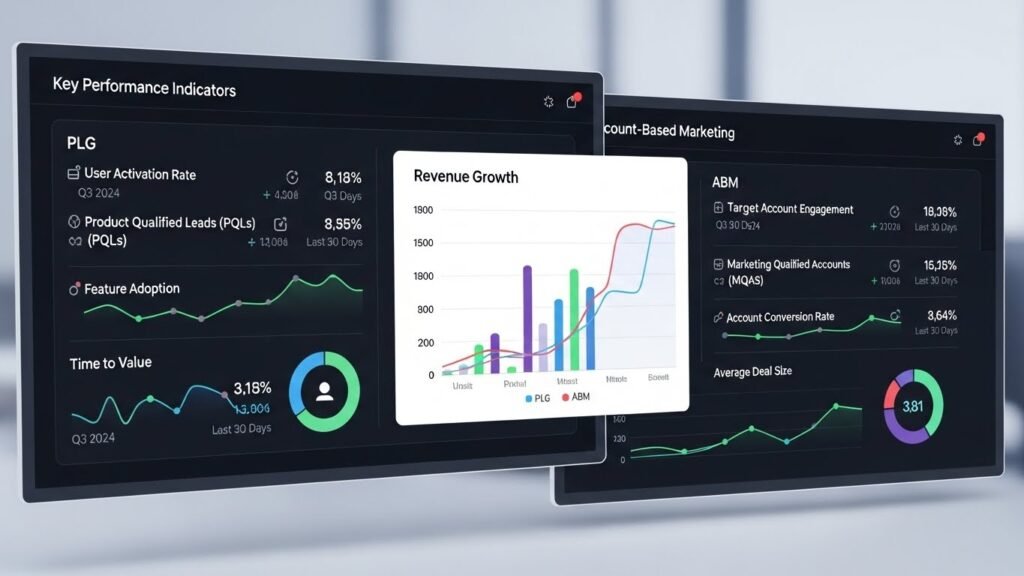
Most founders spend way too much time staring at vanity metrics that don’t mean a thing. They see a spike in traffic and think they’re winning. But traffic doesn’t pay the bills. The problem is, most marketing budgets are just leaked into a black hole because nobody is tracking the stuff that actually keeps the lights on. If you’re in saas sales, you have to look at the cold, hard numbers. Are your sales development reps actually bringing in people who stick around? Or are they just hitting a quota and disappearing? You need to know if your freemium model is actually converting or just attracting free-riders who will never give you a dime. It’s about the money in the bank, not the likes on a post.
Beyond the Deal: Protecting and Growing your Customer Lifetime Value (CLV)
Landing the initial deal is just the start. Honestly, it’s the easiest part of the whole process. The real money is made long after the first contract is signed. This is why customer lifetime value is the only metric I truly care about. If you spend all your cash on account-based marketing to land a big fish, but they churn after three months, you’re losing money. It’s a math problem. You want a product-led growth strategy that makes it impossible for them to leave.
Because once you’re in, you have to stay in. That’s the secret to a good land and expand approach. You start small, prove you aren’t full of it, and then grow that account until it’s ten times the original size. And you can’t do that without proper sales enablement. Your team needs the right tools to keep those conversations going. If they don’t have what they need, the customer walks. And when the customer walks, your bottom line takes the hit. It’s as simple as that.
[IMAGE: A graph showing the exponential growth of CLV over a 24-month period]
Alt-Text: Graph showing how customer lifetime value impacts long term saas sales sustainability.
Sales Enablement: Equipping Your Team for Success
Most founders think their saas sales problem is a talent issue. It usually isn’t. You can hire the best closers in the world, but if they are digging through messy spreadsheets all day, they’re going to fail. Sales enablement is really just about getting the junk out of their way. It’s making sure your sales development reps actually have the right Case Studies and talk tracks ready when a lead pings them. The problem is, most marketing budgets are just leaked into a black hole because the sales team doesn’t even know what content exists. You have to bridge that gap. If you want a high customer lifetime value, your team needs to stop guessing and start using proven workflows. Because at the end of the day, a confused rep never hits their quota.
[Reference: TechCrunch – The Rise of Sales Enablement in Enterprise Tech – https://techcrunch.com]
The Tech Stack Every High-Performing Sales Team Needs
You don’t need fifty different tools. You just need a few that actually talk to each other. Your CRM is the heart of it, obviously. But you also need a way to track how people are using your freemium model. If your sales team can’t see what a user is doing inside the app, they’re flying blind. And for the bigger fish, you need account-based marketing tools that show you exactly who is visiting your pricing page from a specific company.
But don’t overcomplicate it. A bloated tech stack is just as bad as no tech at all. It slows people down. Your reps should be focusing on a land and expand strategy, not fighting with a buggy interface. Good sales enablement tools should make the product-led growth part of your business feel seamless. They should make it easy to see where the next deal is coming from. Because if the tech is a headache, nobody will use it. And then you’re right back where you started.
Conclusion: Building a Sustainable Sales Culture
Look, at the end of the day, you can buy the fanciest software on the market and still fall flat on your face. I see it constantly. Most founders treat saas sales like a cold math equation—just add more bodies and the revenue should pop, right? Wrong. It’s about people. If your reps are hitting a wall or just grinding for commissions without giving a damn about the actual user, your growth is going to stall out. Hard.
Building a culture that doesn’t crumble requires ditching those high-pressure, old-school tactics. You need a crew that actually gives a shift about what they’re pitching. Because when they truly believe in the product, they stop “selling” and start solving. And honestly? Helping people is the only thing that keeps a customer stuck to you for five years instead of jumping ship after five months.
FAQs
Q1: What is the most effective SaaS sales strategy for 2026?
A1: The most effective strategy balances Product-led growth with targeted outreach. Modern companies use a Freemium model to lower the barrier to entry while deploying Sales development reps to handle complex enterprise needs. This hybrid approach ensures you capture small users while closing high-value contracts simultaneously.
Q2: How does Account-based marketing improve SaaS revenue?
A2: Account-based marketing (ABM) drives revenue by focusing resources on high-value targets rather than generic leads. By personalizing the buying experience for specific stakeholders, companies see a significant increase in Customer lifetime value and shorter sales cycles for large-scale enterprise deals.
Q3: What is the benefit of a Land and Expand model?
A3: A Land and expand strategy allows a company to start with a small, single-user footprint and grow organically across an entire organization. It reduces initial friction, builds internal trust, and naturally increases account size without the constant need for aggressive, high-cost re-selling.
Q4: Why is Sales enablement critical for growing tech teams?
A4: Sales enablement provides your team with the specific tools, content, and data needed to close deals faster. It bridges the gap between marketing and sales, ensuring that reps spend less time on administrative tasks and more time engaging in high-quality conversations with qualified prospects.
Q5: How can SaaS companies increase their Customer Lifetime Value?
A5: Increasing Customer lifetime value requires a focus on post-purchase success and strategic expansion. By monitoring usage data and providing ongoing value through the product, teams can identify opportunities for upselling and cross-selling, ensuring the customer remains profitable and loyal over several years.