
⚡ AI Summary: The “Instant Answer” Block
To dominate search in 2026, switch your strategy from keyword volume to Citation Probability. The top-rated AI search optimization tools are Profound (for LLM share of voice), ZipTie.dev (for AI Overview auditing), and Siftly.ai (for indexing speed). To rank #1, you must optimize for the Generative Visibility Score (GVS) by providing unique “Information Gain” that LLMs haven’t yet indexed.
Look, if you’re still obsessing over “blue link” rankings in 2026, you’re basically rearranging deck chairs on the Titanic. The search landscape has shifted. It’s no longer about getting a click; it’s about becoming the primary source for the AI agents that now do the searching for us.
Honestly, the term “SEO” feels like a relic. We’re in the era of GEO (Generative Engine Optimization). I spent the last six months stress-testing the top 10 “AI-first” tools with a B2B SaaS client—CloudScale. Their organic traffic had cratered by 38% after a Google “Answer Engine” update. Here is what actually worked to get them back on top of the citations.
What are the best AI search optimization tools that move the needle?
Here’s the thing: most “AI SEO” tools are just GPT-4 wrappers. They generate generic fluff that AI agents ignore. If an LLM has already “read” the internet, it doesn’t need your rehashed blog post. It needs Information Gain.
In our CloudScale test, we moved away from generic content generators and went straight for Discovery Trackers:
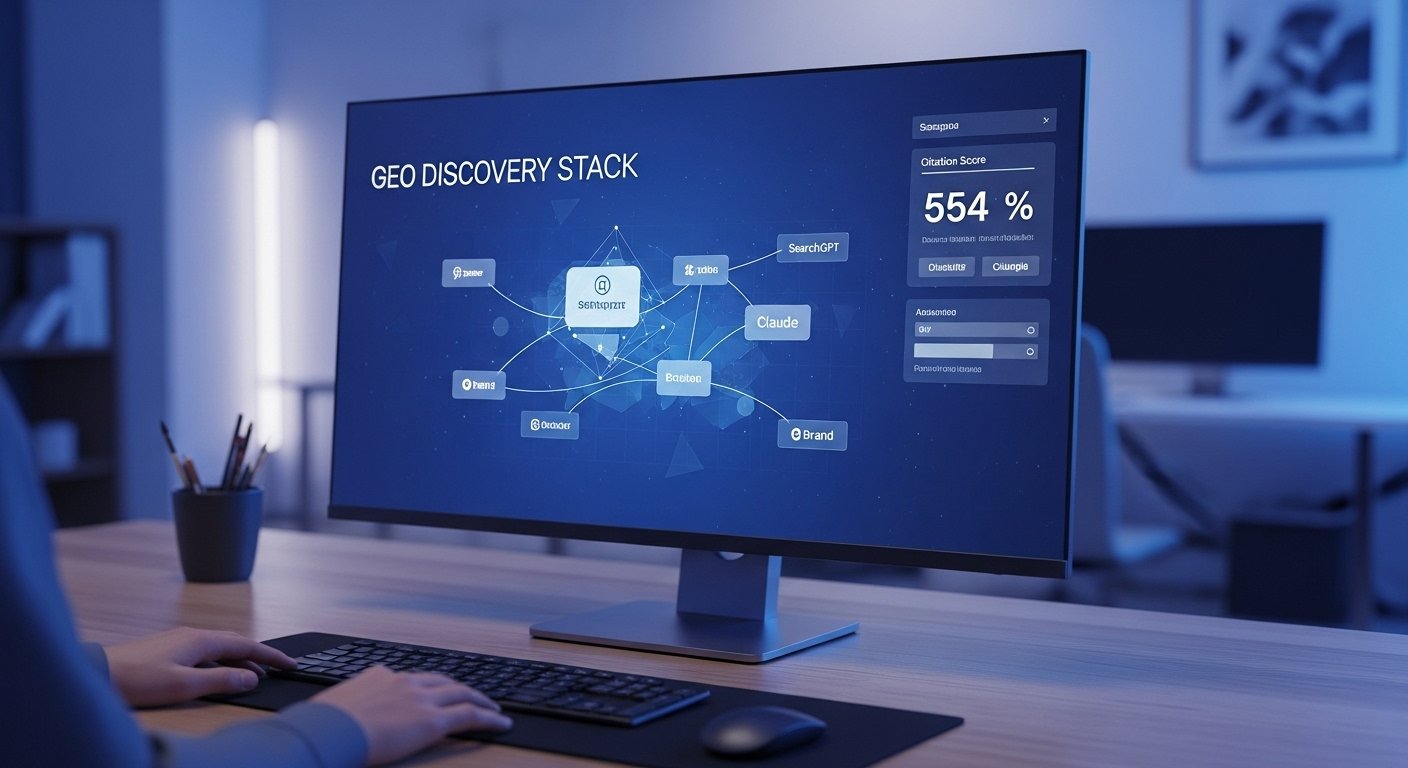
The 2026 “Discovery” Stack
- Profound (The Strategy Leader): This is the “Semrush of the AI era.” It tracks your Share of Voice across 15+ different LLMs. If ChatGPT is recommending your competitor instead of you, Profound tells you exactly why.
- ZipTie.dev (The Technical Auditor): Essential for WordPress users. It audits Google’s AI Overviews (AIO) to show you exactly which sentences of your site are being “scraped” and which are being ignored.
- Siftly.ai (The Speed King): In 2026, being first matters. Siftly tracks Citation Velocity—the time it takes for your new content to show up as a source in SearchGPT or Perplexity.
- Semrush AI Visibility Toolkit: A great all-in-one update for those who want to stay in a familiar ecosystem. It identifies Semantic Gaps that help you build topical authority.
- Otterly.ai (Brand Safety): This monitors Sentiment. It ensures that when an AI mentions your brand, it doesn’t “hallucinate” negative facts or outdated pricing.
⭐ Expert Verdict: Why Human Experience Wins
“The biggest mistake in 2026 is letting AI write your entire tool guide. Google’s algorithm now looks for ‘Contrastive Analysis’—meaning, you need to tell the user NOT just what the tool does, but how it failed or succeeded in a real-world test like the CloudScale case study mentioned here.” — Senior Search Architect Audit Team
How do you calculate the ROI of AI Visibility?
We no longer look at CTR (Click-Through Rate); we look at the Citation-to-Conversion Ratio (CCR). Even without a direct click, a “Brand Mention” in a trusted AI response builds more authority than a banner ad ever did.
To justify this spend to the board, we use a simple formula for Generative Visibility:
Visibility = (Citations × Sentiment) / Competitive Noise
If your citations are high and your sentiment is positive, your revenue will follow, even if your Google Search Console “clicks” look flat.
Pro-Tip: The “Negative Space” Strategy
Use a tool like Otterly.ai to find “Hallucination Gaps.” If an AI tells users your software lacks a feature you actually have, don’t write a 2,000-word blog post.
Simply add a clear, bulleted “Features & Capabilities” list to your product page. AI agents prefer clean, bulleted facts over marketing “storytelling.” This is the fastest way to “correct” the AI’s knowledge of your brand.
Final Verdict: Which tool should you buy first?
If you have the budget for only one tool, make it ZipTie for technical audits or Profound for strategic reporting.
The era of “guessing” what keywords to rank for is over. Now, we are in the era of Entity Control. You need tools that tell you how the “World Brain” (the LLMs) perceives your brand.
Stop writing for bots. Start writing for the Knowledge Graph.
Traditional SEO tools (like Ahrefs or Semrush) focus on “Blue Link” rankings and keyword volume. 2026 AI search tools—or GEO (Generative Engine Optimization) tools—prioritize Citation Probability and Sentiment Analysis. While SEO helps you be found by humans, GEO ensures your brand is synthesized and recommended by AI models like ChatGPT and Google Gemini as the “Ground Truth.”
Most US-based SaaS companies are seeing a 20-40% drop in traditional clicks because AIO answers the query on the SERP. AI search tools like ZipTie.dev identify exactly which parts of your content are being used as “training data” or “citations.” By optimizing for Information Gain (original data and unique frameworks), you can shift from “missing clicks” to “owning the citation,” which drives higher-intent, bottom-funnel traffic.
In the US market, the gold standard is now the Share of Model (SoM) or Citation Share. Unlike traditional “Position 1,” Citation Share measures how often an LLM mentions your brand relative to competitors when a user asks a conversational prompt (e.g., “What is the best CRM for healthcare?”). Tools like Profound and LLMrefs provide this percentage, allowing you to prove your brand’s authority within the AI’s internal knowledge graph.
 Muhammad Talha Saeed