

Introduction
In today’s competitive business world, having a great product or service is no longer enough. Companies need to build trust, communicate their value, and create a strong identity that customers remember. This is where B2B branding plays an important role.
B2B buyers usually research multiple companies before making decisions. They look for expertise, reliability, and brands they can trust. A strong B2B brand helps businesses differentiate themselves, improve credibility, and build long-term customer relationships.
Whether you are a SaaS company, startup, or growing business, a clear branding strategy can help you create a stronger market position and attract the right customers.
Quick Summary: What Is B2B Branding?
B2B branding is the process of building a company’s identity, reputation, and market position when selling products or services to other businesses. It includes brand positioning, messaging, visual identity, and customer experience to create trust with business buyers.
Key Takeaways
- B2B branding helps businesses build trust, credibility, and recognition in competitive markets.
- A strong brand requires clear positioning, effective messaging, consistent identity, and positive customer experience.
- B2B companies can differentiate themselves by focusing on customer problems and measurable business outcomes.
- SaaS companies need strong branding to communicate complex solutions and build customer confidence.
- AI tools can help businesses create consistent content and improve branding workflows.
What Is B2B Branding?
B2B branding refers to how a company creates, manages, and communicates its identity in the business market.
It includes different elements that shape customer perception, such as:
- Brand positioning
- Brand messaging
- Visual identity
- Brand voice
- Customer experience
- Business reputation
B2B branding is not only about creating a logo or designing a website. It represents the complete experience customers have with a company.
A strong B2B brand clearly answers:
- Who do we help?
- What problem do we solve?
- Why should customers choose us?
Effective branding improves brand awareness, recognition, trust, and long-term business growth.
B2B Branding vs B2C Branding
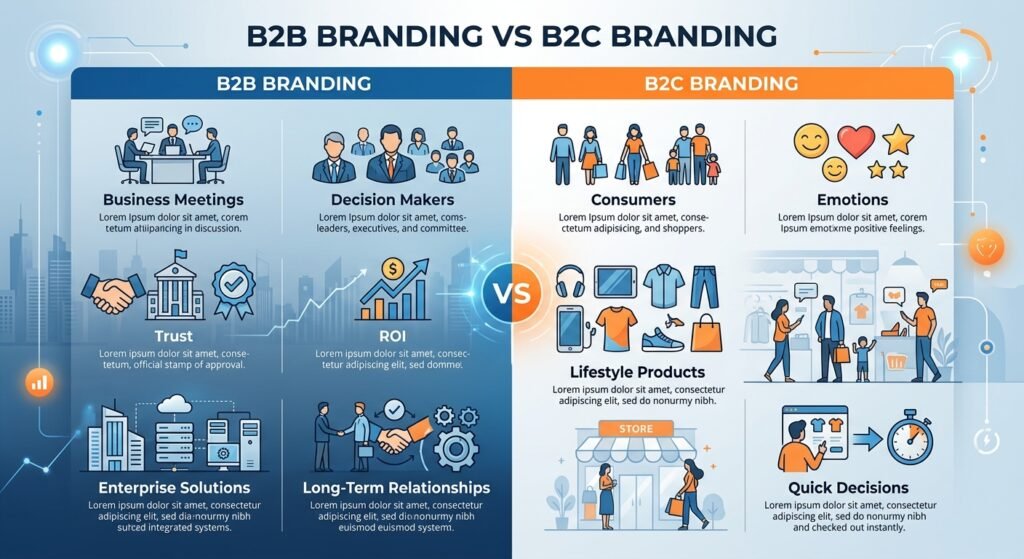
Although both focus on creating customer relationships, B2B and B2C branding work differently.
| B2B Branding | B2C Branding |
|---|---|
| Targets businesses and organizations | Targets individual consumers |
| Multiple decision-makers involved | Usually one buyer |
| Focuses on trust, expertise, and ROI | Focuses more on emotions and lifestyle |
| Longer buying cycle | Faster purchase decisions |
B2B buyers usually evaluate expertise, reliability, and business value before making purchasing decisions.
Why Is B2B Branding Important?
1. Builds Trust With Decision Makers
B2B purchases often involve large investments and long-term commitments. Companies prefer working with brands that appear reliable and professional.
Strong branding communicates:
- Expertise
- Credibility
- Reliability
- Industry knowledge
Trust reduces uncertainty and helps customers make confident decisions.
2. Creates Competitive Advantage
Many companies offer similar products and services. Without strong branding, businesses can become difficult to differentiate.
Effective B2B branding helps companies highlight:
- Unique value
- Better solutions
- Industry expertise
- Customer benefits
A clear brand position helps customers understand why they should choose one company over another.
3. Improves Customer Relationships
Branding continues after acquiring customers.
Every interaction affects brand perception:
- Website experience
- Sales communication
- Customer support
- Product experience
A consistent customer experience improves loyalty and retention.
4. Supports Marketing and Sales Growth
Marketing creates awareness, but branding creates trust and recognition.
A strong brand helps sales teams communicate:
- Who the company serves
- What makes it different
- What value it provides
B2B Branding vs B2B Marketing: Key Difference
Many businesses confuse branding with marketing, but they serve different purposes.
| B2B Branding | B2B Marketing |
|---|---|
| Builds identity and reputation | Promotes products and services |
| Creates trust | Generates leads |
| Long-term strategy | Campaign-focused activity |
| Shapes customer perception | Encourages customer action |
Successful businesses use both. Marketing helps people discover a company, while branding gives them a reason to trust it.
Key Elements of Successful B2B Branding
1. Brand Positioning
Brand positioning defines how customers understand your company compared to competitors.
A strong positioning strategy answers:
- Who is your target audience?
- What challenge do you solve?
- What makes your solution different?
A simple positioning formula:
We help [audience] achieve [result] through [solution].
Clear positioning improves differentiation and market visibility.
2. Brand Messaging
Brand messaging explains your company’s value clearly.
Effective messaging focuses on:
- Customer problems
- Business outcomes
- Benefits
- Solutions
Successful brands do not only explain features; they communicate the results customers can achieve.
3. Visual Brand Identity
Visual identity helps customers recognize your company.
Important elements include:
- Logo
- Website design
- Colors
- Typography
- Marketing materials
A professional visual identity improves credibility and brand recognition.
4. Brand Voice
Brand voice defines how a company communicates.
A strong B2B brand voice should be:
- Clear
- Professional
- Helpful
- Trustworthy
Consistency across websites, emails, and social platforms strengthens recognition.
5. Customer Experience
A brand is created through every customer interaction.
Important touchpoints include:
- Website
- Sales process
- Customer support
- Product experience
Positive experiences strengthen brand reputation.
How To Build A B2B Branding Strategy
Step 1: Understand Your Audience
Start by defining your Ideal Customer Profile (ICP).
Understand:
- Industry
- Company size
- Customer challenges
- Buying behavior
- Business goals
Customer research helps create relevant messaging.
Step 2: Analyze Competitors
Study competitors to find opportunities for differentiation.
Analyze:
- Their positioning
- Their messaging
- Their strengths
- Their weaknesses
The goal is not copying competitors but creating a unique market position.
Step 3: Define Your Brand Position
Create a strong foundation:
- Mission
- Vision
- Values
- Value proposition
Your positioning should clearly explain why customers should choose your business.
Step 4: Build Consistent Communication
Maintain the same brand message across:
- Website
- Social media
- Content marketing
- Sales materials
Consistency creates familiarity and trust.
Step 5: Create Valuable Content
Content plays an important role in modern B2B branding.
Businesses can build authority through:
- Educational articles
- Industry guides
- Case studies
- Research content
- Expert insights
Useful content helps companies become trusted sources in their industries.
The 5P B2B Branding Framework
A simple framework for building a stronger B2B brand:
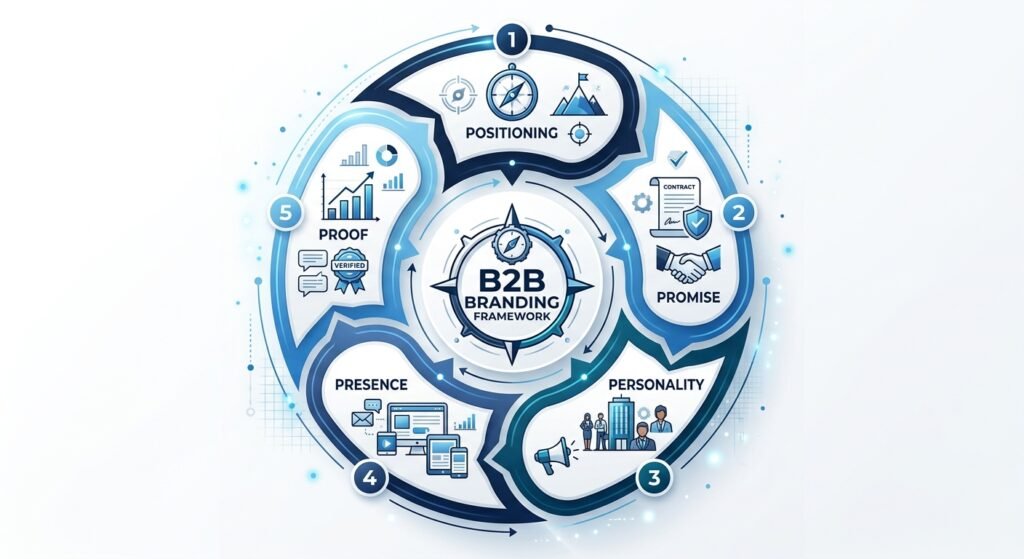
1. Positioning
Define your place in the market and identify your target customers.
2. Promise
Clearly communicate the value and results customers can expect.
3. Personality
Create a recognizable communication style that represents your brand.
4. Presence
Build visibility across important digital channels.
5. Proof
Use expertise, customer results, and success stories to build trust.
B2B SaaS Branding: Why It Matters
SaaS companies operate in highly competitive markets where many solutions appear similar.
Strong B2B SaaS branding helps companies:
- Explain complex products clearly
- Build customer confidence
- Reduce buying hesitation
- Create stronger digital presence
For SaaS businesses, branding is not only about appearance. It is about educating customers, building trust, and showing why a solution matters.

B2B Branding Examples
Salesforce
Salesforce built a strong B2B brand through enterprise trust, customer success, and business transformation messaging.
HubSpot
HubSpot developed brand authority through educational content, marketing resources, and community building.
Slack
Slack created recognition through simple messaging focused on workplace communication and productivity.
How AI Is Changing B2B Branding
Artificial intelligence is transforming how companies create and manage brands.
AI tools help businesses:
- Create content faster
- Maintain brand voice
- Generate marketing ideas
- Analyze customer interests
- Improve personalization
For SaaS companies and startups, AI can make branding workflows more efficient.
However, successful branding still requires human strategy, creativity, and customer understanding.

How To Measure B2B Branding Success
Businesses can measure branding performance through:
- Brand awareness
- Website traffic
- Branded searches
- Lead quality
- Customer retention
- Customer feedback
Strong branding creates measurable long-term business value.
Common B2B Branding Mistakes
1. Thinking Branding Is Only A Logo
A logo is only one part of branding. Trust, messaging, and customer experience matter more.
2. Using Generic Messages
Companies should clearly explain:
- Who they help
- What problems they solve
- What results they create
3. Ignoring Customer Research
Without understanding customers, branding becomes disconnected from real business needs.
Frequently Asked Questions
B2B branding is the process of building a company’s identity, reputation, and market position when selling products or services to other businesses.
It helps companies build trust, differentiate from competitors, and create stronger customer relationships.
The main elements include positioning, messaging, visual identity, brand voice, and customer experience.
Yes. AI can support content creation, research, personalization, and maintaining consistent brand communication.
Branding builds trust and identity, while marketing promotes products and generates leads.
Conclusion
B2B branding is a long-term strategy that helps businesses build trust, improve recognition, and create stronger customer relationships.
By focusing on positioning, messaging, customer experience, and consistent communication, companies can develop a powerful market presence.
For modern SaaS companies and businesses, combining strategic branding with AI-powered tools can create more efficient and scalable growth opportunities.
About the Author
AISaaSWriter Content Team
AISaaSWriter Content Team focuses on AI-powered content strategies, SaaS marketing, and digital growth practices for modern businesses. The team helps companies improve their online presence through effective content solutions and strategic communication.
 Talha Saeed